
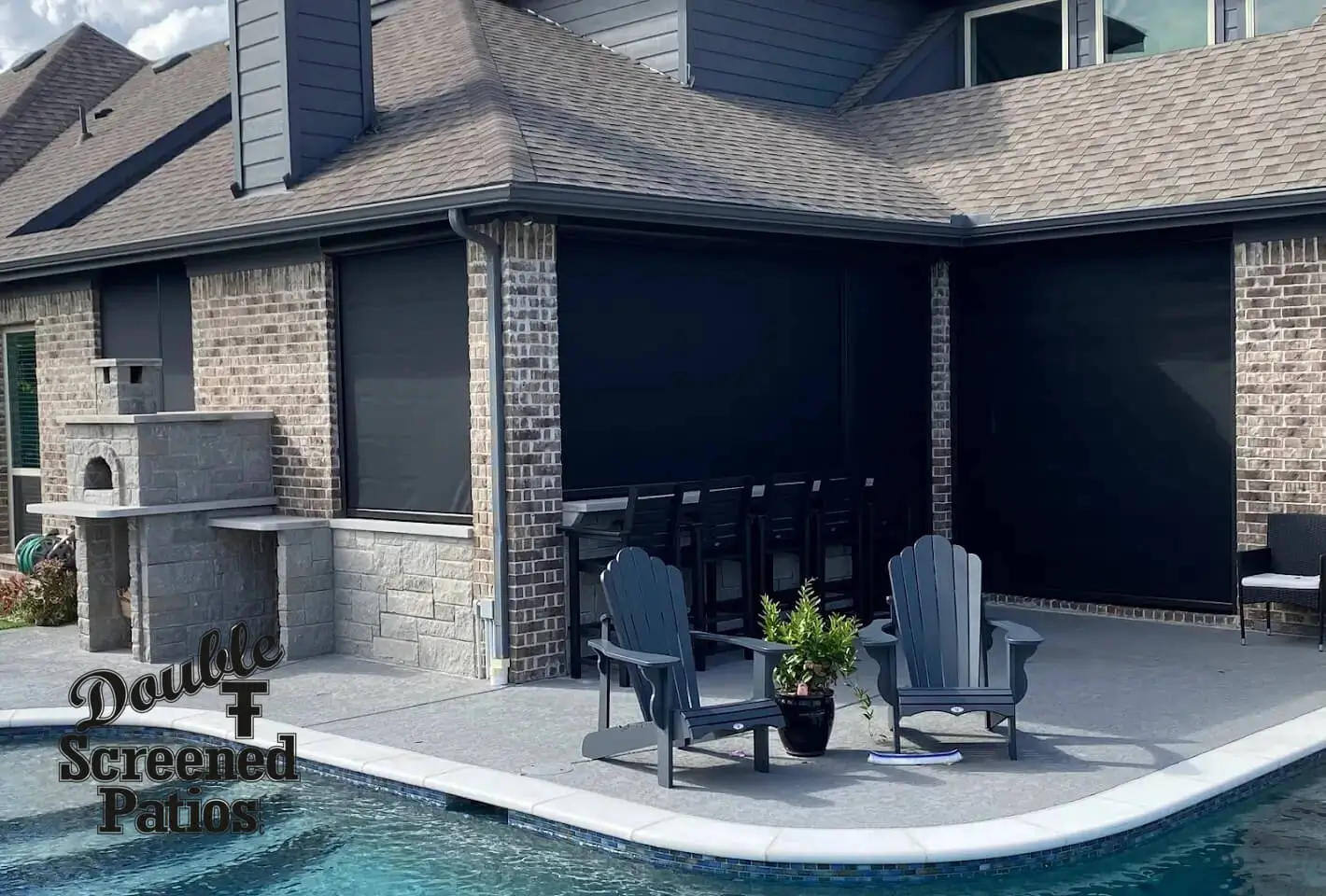
Bug Protection That Works: Why Collin & Denton County Homeowners are Choosing Permanent Screened Enclosures
If you live in Collin & Denton Counties, mosquito season can turn a great patio into a place you avoid by June. Many homeowners try bug netting first. It is fast, cheap, and easy to find. But most end up calling us anyway, usually after a summer of adjusting fabric, chasing gaps, and still getting bitten.
While netting seems like a convenient fix, it often falls short of the demands of a North Texas summer. Understanding the difference between a temporary mesh and a structural screened patio, or even a year-round sunroom, is the first step toward truly reclaiming your outdoor space.
Why Bug Netting Usually Fails
Bug netting sounds reasonable. In practice, it solves about half the problem.
The core issue is simple: netting requires a perfect seal every single time you use the space. In a busy Collin & Denton Counties backyard, that rarely happens.
Here is where it breaks down:
- Wind pulls fabric away from anchor points
- Kids and pets create gaps every time they go in and out
- Bottom edges lift on uneven slabs and pavers
- Fabric snags, tears, and sags with regular use
- Once it stops closing correctly, it stops working
Beyond mosquitoes, netting does nothing for heat, afternoon sun, or the sudden storms that roll through North Texas. The product simply was not designed for the way most families use an outdoor space.
What a Screened Patio Actually Delivers
A professionally built screened patio is a completely different category of solution.
How it is built:
- Structural aluminum framing anchored to your existing slab or foundation
- Screen panels tensioned and fitted to eliminate gaps at every edge and corner
- A self-latching door that closes securely on its own
- Professional-grade mesh that blocks mosquitoes without restricting airflow
Why it holds up in Collin & Denton Counties:
Collin & Denton Counties’ wind, summer heat, and busy family traffic push temporary solutions past their limits fast. A commercial-grade screened enclosure is built for all of it, with no seasonal replacement and no weekend maintenance.
A screened patio is the right fit if you:
- Eat outside regularly during spring, summer, and fall
- Host guests and want them to be comfortable without planning around bugs
- Have kids or pets moving in and out constantly
- Want a finished look that adds to your home’s appearance and value
- Need a solution that holds up in wind and rain, not just calm evenings
One important note:
Even the best enclosure cannot fix a yard that keeps breeding mosquitoes. The City of Collin & Denton Counties notes that mosquitoes can complete their life cycle in as little as seven to ten days in standing water. Walk your yard weekly and dump standing water from planters, saucers, and low spots after rain. This one habit makes your enclosure significantly more effective.
When a Sunroom Is the Better Investment
A screened patio solves the warm-weather problem. A sunroom solves the year-round problem.
A sunroom is worth considering if you want:
- Year-round comfort in January as easily as July
- Climate control with insulated panels
- A space that feels like a real room, not an outdoor addition
- Added square footage that increases your home’s resale value
- A flexible space for a home office, dining room, or playroom
The financial case:
Sunrooms typically return between 50 and 80 percent of their cost at resale, depending on build quality and integration with the home. The daily value of a comfortable, climate-controlled room used twelve months a year tends to outweigh the upfront cost difference within a few years.
The upgrade path:
Many homeowners start with a screened patio and later convert to a fully enclosed sunroom. Building with that upgrade in mind from the start means the existing framing and foundation can support the conversion without starting over.
How to decide:
| Your goal | Best solution |
| Bug protection during patio season | Screened patio |
| Year-round comfortable living space | Sunroom |
| Temporary or low-cost coverage | Bug netting |
Both the screened patio and sunroom are permanent, professionally installed, and require none of the ongoing adjustments that netting demands.
Common Questions Collin & Denton Counties Homeowners Ask
How long does installation take?
Most screened patio installations are completed in one to three days. There is no major construction since the enclosure attaches to your existing slab and roof structure.
Will it hold up in a Texas storm?
Yes. Structural aluminum framing is anchored directly to the foundation, and screen panels are tensioned to resist movement. It is far more stable than any fabric or netting solution.
Can I add heating or cooling later?
A screened patio is open to the air and works best in mild temperatures. If year-round comfort is the priority from the start, a sunroom with insulated panels and a climate system is the better choice.
Ready to Stop Adjusting and Start Enjoying Your Outdoor Space?
The right solution depends on your patio layout, how you use the space, and what you want it to feel like long-term. Reach out to Double T Screened Patios, and we will help you decide whether a screened patio or sunroom makes more sense for your Collin & Denton Counties home, with honest trade-offs, clear pricing, and no pressure.
For another way to gain comfortable, bug-protected living space, see how screen rooms help North Texas tiny homes live larger.