How to Keep Your Patio Cool in the Texas Summer Heat
Texas summers are no joke. In Collin & Denton Counties, temperatures regularly climb past 100°F, and a concrete or wood patio sitting under direct sun can feel like standing next to an open oven. If you’ve got a beautiful backyard but stop using it the moment June rolls around, you’re not alone.
The good news? There are real, proven ways to bring those outdoor temperatures down by 10 to 20 degrees. Some fixes are quick and inexpensive. Others are structural investments that pay off for years. This guide breaks down both so you can pick what fits your space, budget, and how seriously you want to tackle the heat.
If you’d like to talk through options before doing anything, feel free to reach out to a sunroom builder in Collin & Denton Counties who can look at your specific setup.
Why Texas Summers Hit Different on Your Patio
It’s not just the air temperature. In Collin & Denton Counties, you’re dealing with:
- Radiant heat bouncing off concrete and brick surfaces
- High UV exposure that heats up furniture, flooring, and your skin fast
- Humidity spikes after rain, making the heat feel even heavier
- Little natural shade in newer neighborhoods with young trees
So cooling a Texas patio isn’t just about blocking the sun above you. It’s about managing heat coming from every direction.
Start with the Biggest Factor: Overhead Shade
Nothing drops patio temperatures faster than a proper overhead cover. This is where most homeowners see the biggest return on their effort.
Patio Covers
A solid or polycarbonate patio cover blocks direct sunlight completely. Solid insulated covers are especially effective because they stop radiated heat from passing through the roof panel. In Texas heat, an insulated patio cover can reduce the surface temperature underneath by 20 degrees or more compared to an uncovered slab.
The trade-off is that solid covers are permanent. They’re ideal if you want consistent shade in a fixed location.
Louvered Pergolas
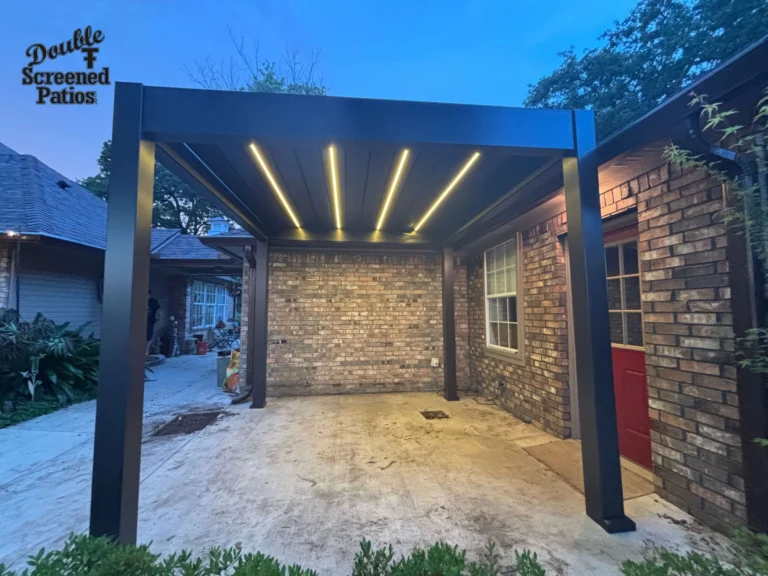
A louvered pergola gives you something better than a fixed cover: control. The adjustable aluminum blades rotate to let in light on cool mornings and close up tight during peak afternoon heat. Most systems are motorized, so you’re adjusting from your phone or a wall switch.
The blades on a quality louvered system also block UV and deflect heat before it ever reaches your seating area. Given that Collin & Denton Counties’ afternoons can go from pleasant to brutal in under an hour, the flexibility here matters.
Block the Sun from the Sides, Too
Once you’ve handled overhead shade, the next issue is sun angle. In summer, the sun sits lower in the western sky during the late afternoon, which means light and heat pour in from the sides, not just above.
Motorized Retractable Screens
Motorized retractable screens are one of the most practical tools for a Texas patio. They drop down to block western sun exposure, cut glare, and reduce wind-driven heat. When you don’t need them, they roll back up and disappear completely.
Solar-shade fabric screens are worth the upgrade over standard mesh. They’re specifically engineered to reject UV rays and reduce ambient heat, while still giving you a view of the yard.
Privacy Screens and Windbreaks
If your patio faces a neighbor’s fence, a road, or a west-facing open lot, a privacy screen can double as a heat shield. Dense screening materials slow down hot, dry winds and create a cooler microclimate in your seating area.
Quick Wins That Actually Work
Not every fix needs a contractor. These practical additions can make an immediate difference while you plan bigger improvements:
- Outdoor ceiling fans: A large-blade fan can make 95°F feel like 85°F through the wind-chill effect. Go for fans rated for wet or damp outdoor locations.
- Misting systems: Low-pressure misting along the roofline or pergola works well in dry heat. In humid conditions after summer storms, high-pressure misting is more effective.
- Light-colored or reflective decking: Dark composite or concrete absorbs and re-radiates heat aggressively. Light gray, tan, or textured surfaces stay noticeably cooler underfoot.
- Shade sails: A good interim solution for renters or those not ready for a permanent structure. Angle them at 45 degrees rather than flat to shed water and improve shade coverage.
- Strategic potted plants: Tall plants in large containers (like ornamental grasses or banana plants) create localized shade and release moisture through transpiration, which cools the immediate air slightly.
Permanent vs. Temporary Cooling: A Quick Comparison
Here’s a straightforward look at how different solutions stack up for a Collin & Denton Counties patio:
| Solution | Heat Reduction | Lifespan | Best For |
| Insulated patio cover | High | 20+ years | Full overhead protection |
| Louvered pergola | High | 15-25 years | Flexible shade control |
| Motorized retractable screens | Medium-High | 10-15 years | Side sun and glare blocking |
| Outdoor ceiling fan | Medium | 5-10 years | Moving air, wind-chill effect |
| Misting system | Medium | 3-7 years | Dry-heat days |
| Shade sail | Low-Medium | 2-5 years | Budget or temporary use |
The pattern is clear: structural solutions last longer and deliver more consistent cooling. Quick fixes are good supplements, not replacements.
When It’s Time to Go Fully Enclosed
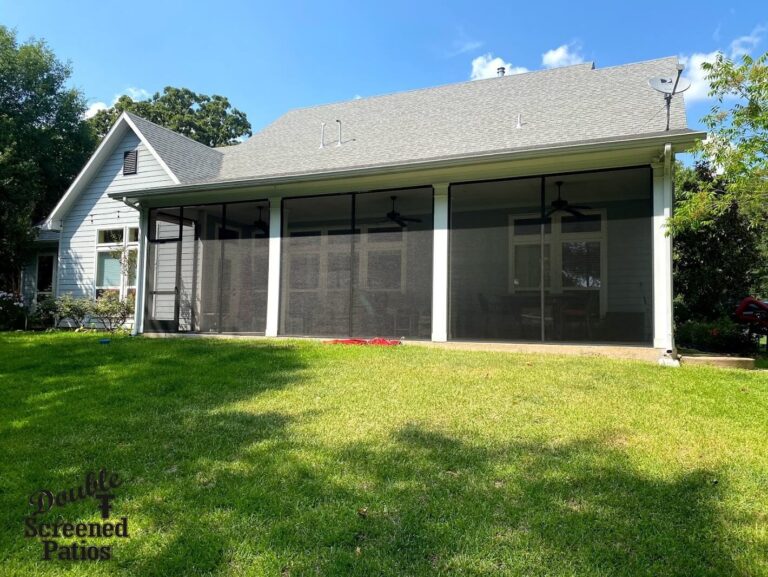
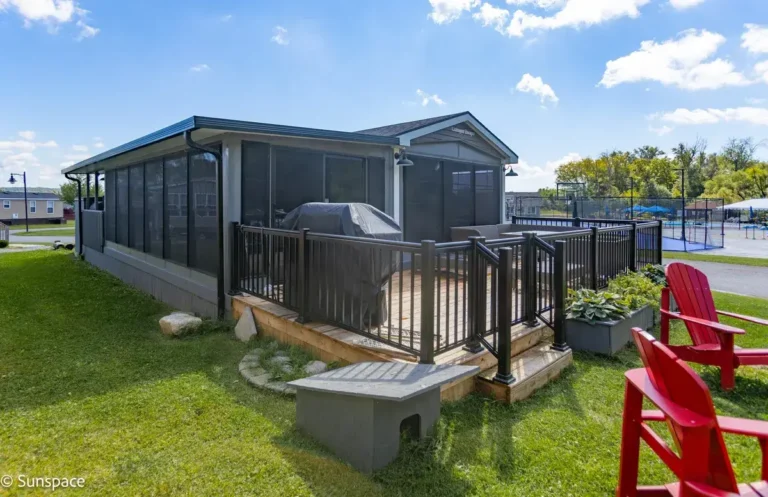
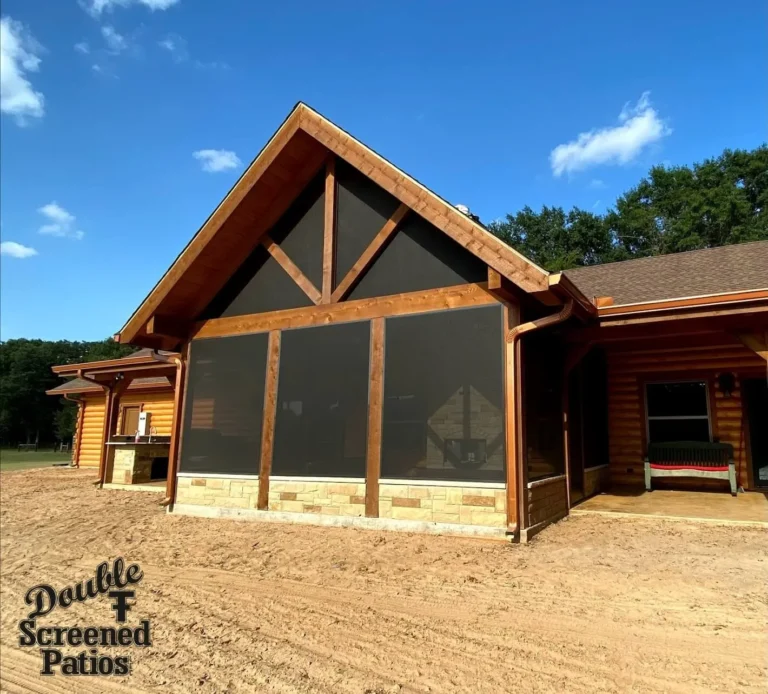
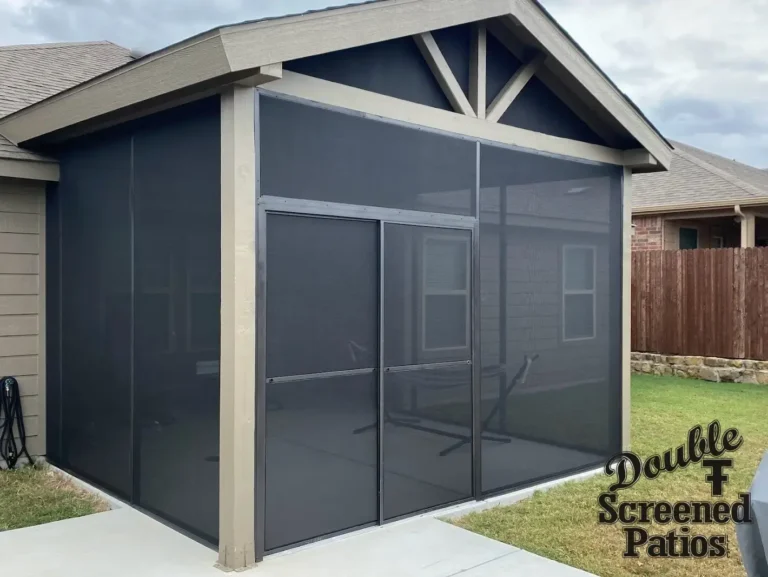
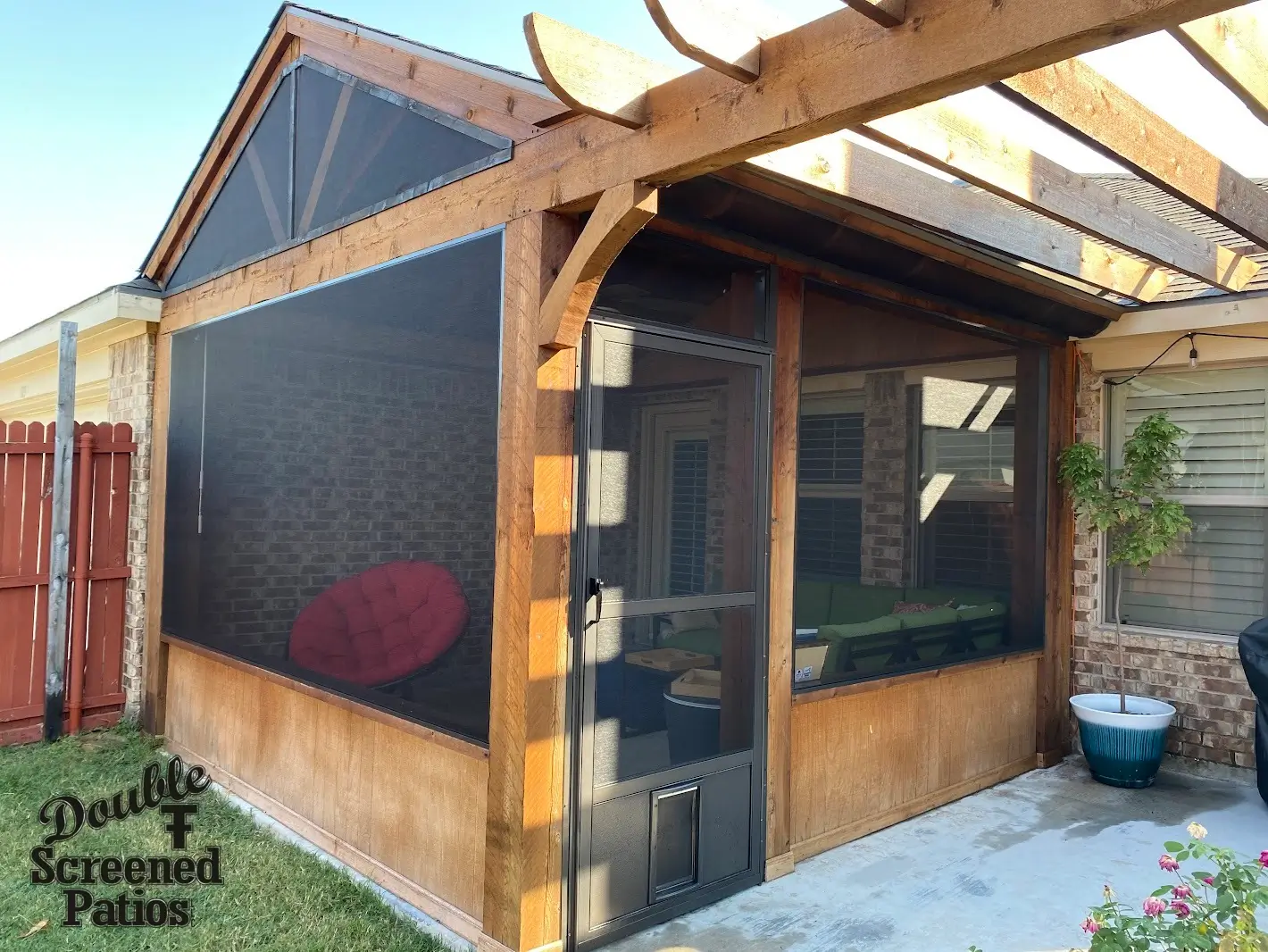
Some homeowners eventually decide that a partially open patio still isn’t enough for Texas summers. At that point, a screened porch or a three-season room with operable windows makes a lot of sense.
A screened enclosure keeps insects out and lets breezes through, which makes a shaded space feel significantly cooler. A three-season room steps it up further by adding glass or vinyl panels that seal out heat on the worst days while still feeling like an outdoor space. If you’re thinking about a sunroom installation in Collin & Denton Counties, that’s essentially a fully enclosed, insulated space that stays comfortable even on 105°F days.
The right choice depends on how much of the year you want to use the space and your overall budget.
Frequently Asked Questions
How much cooler can a patio cover make my patio in Texas?
A solid insulated patio cover can reduce the temperature underneath by 15 to 20 degrees compared to a fully exposed slab. Louvered pergolas with closed blades perform similarly and also block UV radiation.
Do misting systems really work in Collin & Denton Counties humidity?
Low-pressure misting works best on dry days. During humid stretches, high-pressure misting (which produces a finer, evaporating mist) is much more effective. For consistent results through the whole summer, pairing misting with overhead shade gives you better coverage.
What’s the most cost-effective long-term solution for a hot Texas patio?
An insulated patio cover typically offers the best value over time. The upfront cost is higher than a fan or shade sail, but the cooling benefit is consistent, and the structure lasts for decades with minimal maintenance.
Can I combine a patio cover with motorized screens?
Yes, and this is actually one of the most popular setups in Collin & Denton Counties. A solid or louvered cover handles overhead sun, and motorized screens drop down on the west and south sides to block late-afternoon heat. Together, they handle the sun from every angle.
Will a louvered pergola hold up to Texas storms?
Quality aluminum louvered systems are built for high-wind conditions. Most are rated for wind loads well above typical Collin & Denton Counties storm levels, and the closed-blade position is actually the strongest configuration structurally.
Ready to Make Your Patio Usable All Summer?
You don’t have to abandon your backyard from June through September. With the right combination of overhead shade, side screening, and airflow management, a Collin & Denton Counties patio can be genuinely comfortable even on a hot Texas afternoon.
If you’re trying to figure out which solutions make the most sense for your layout, Double T Screened Patios has been helping Collin & Denton Counties homeowners build cooler, more usable outdoor spaces for over a decade. Reach out to start a conversation about your patio.