7 Types of Patio Covers: Which One Is Right for Your Collin & Denton Counties-Area Backyard?
If you’ve started shopping for a patio cover, you’ve probably noticed there isn’t just one kind. Aluminum, insulated, wood, vinyl, screened, motorized: the options pile up fast, and picking wrong means either overpaying for features you don’t need or ending up with a cover that can’t handle a North Texas summer.
Here’s a breakdown of the main patio cover types, what each one is actually good for, and how to think about cost before you get quotes.
1. Aluminum Patio Covers
Aluminum is the most common patio cover material in the Collin & Denton Counties area, and for good reason. It doesn’t rot, warp, rust, or attract termites the way wood does, and it holds up to Texas heat and hail far better than most alternatives. If you want something that still looks good in 15 years without regular upkeep, this is the starting point.
Not all aluminum is equal, though. Thinner, big-box-store aluminum can dent or flex in strong wind. Look for heavier-gauge, structurally engineered systems (like Sunspace’s laminated aluminum-skin panels) rather than generic aluminum patio kits.
2. Insulated Patio Covers
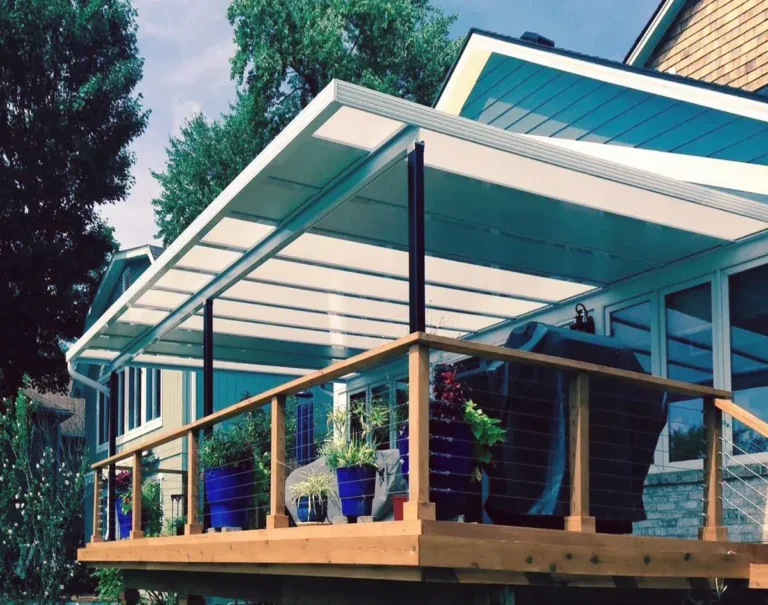
An insulated patio cover uses a foam-core panel roof instead of solid aluminum or open lattice. The insulation cuts down heat radiating off the roof, which matters a lot in a Texas summer when an uninsulated metal roof can make the space underneath nearly unusable by mid-afternoon. Insulated covers cost more upfront than solid or open aluminum, but if you’re planning to actually sit under this thing in July, the comfort difference is hard to overstate.
Double T installs Sunspace’s insulated patio cover roofing systems, the same manufacturer behind the WeatherMaster windows we use for enclosures. The panels use a foam core with aluminum skins on both sides, rated to cut heat transfer significantly compared to a solid aluminum roof.
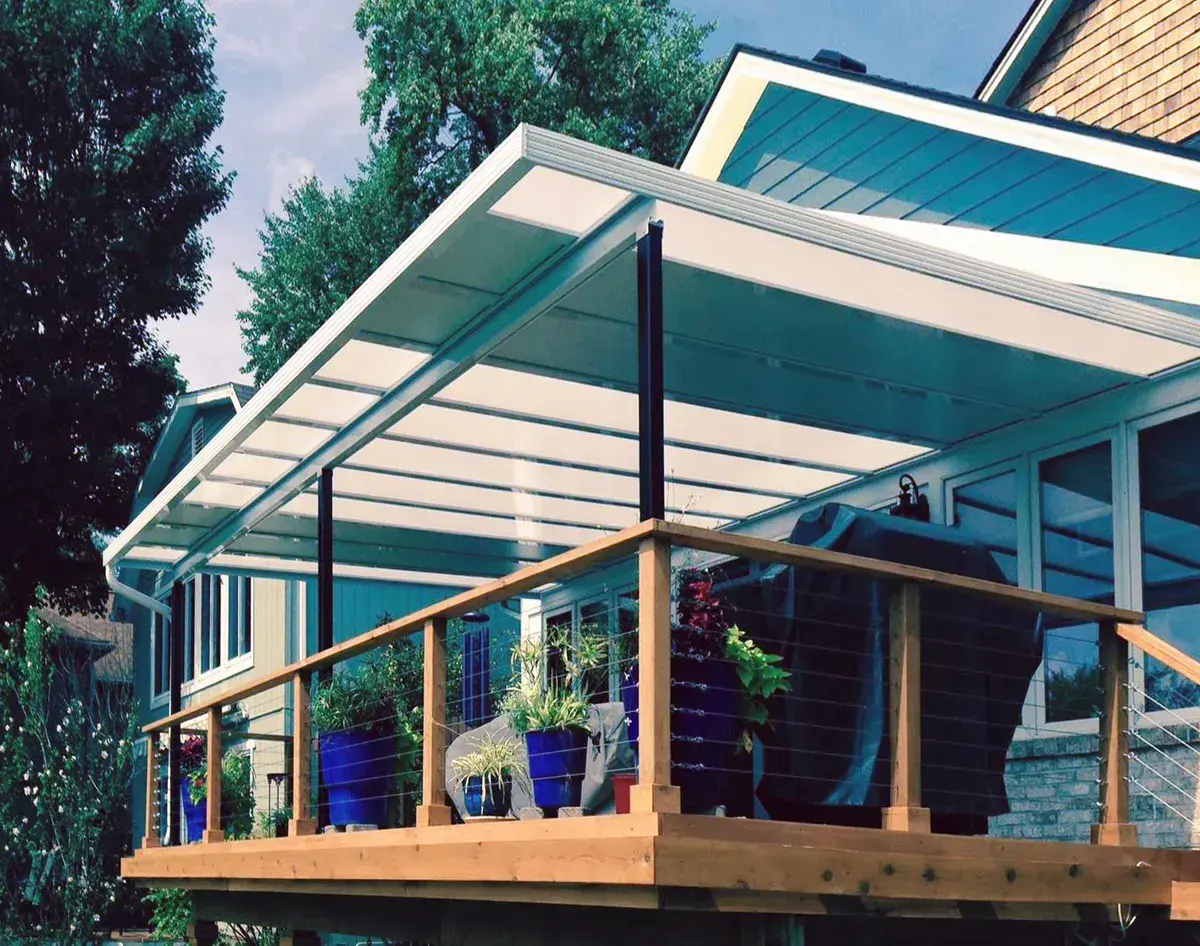
There’s also an acrylic roof option: rigid, semi-transparent panels that let diffused light through while blocking UV rays, for homeowners who want shade without losing natural light. For a detailed cost breakdown of insulated, acrylic, and hybrid roof systems, see our 20×20 patio cover cost guide for Collin & Denton Counties.
3. Solid (Non-Insulated) Aluminum Covers
This is the standard, budget-friendly version: a flat or gently sloped solid aluminum roof with no insulation layer. It blocks sun and rain, which is fine if you’re covering a grill or keeping furniture out of the weather. But in direct Texas sun, the metal itself heats up and radiates warmth downward, so it’s a poor choice if you want to actually sit under it during peak afternoon heat.
4. Wood Patio Covers
Wood (cedar is the most common choice locally) gives a warmer, more traditional look than aluminum, and it’s often what people picture when they think “patio cover.” The tradeoff is upkeep: wood needs regular staining or sealing to hold up against Texas humidity swings and UV exposure, and it’s more vulnerable to termites and rot over time than aluminum. If you’re prioritizing look over long-term low maintenance, it’s worth the extra work. If you’re not, aluminum will save you a lot of weekends.
A pergola is the most common wood-style cover, an open lattice roof rather than a solid one, so it filters light instead of blocking it entirely. It’s a popular pick for homeowners who want definition and shade for a seating or dining area without fully enclosing the space. (If you like the pergola look but want adjustable shade instead of fixed lattice, see the motorized louvered option below.)
5. Screened / Enclosed Patio Covers
This isn’t a roofing material. It’s an add-on that turns any of the roof types above into a fully or partially enclosed room. Screen panels keep out mosquitoes, pollen, and debris while still letting air through, which matters if you want to actually use the patio in the evening during North Texas mosquito season without getting eaten alive. Screening layers onto aluminum or insulated roofing rather than replacing it, so think of this as a decision on top of your material choice, not a separate category.
6. Motorized / Louvered Patio Covers
These are adjustable-roof systems: the louvers (slats) tilt open for sun and fresh air, or close for full shade and rain protection, usually with a remote or wall switch. It’s the highest-cost option on this list, and it’s overkill if you just want basic shade. But for homeowners treating the patio as a real outdoor living space and wanting the flexibility to change the setup on the fly, it’s the one system that actually does that.
7. Freestanding vs. Attached Patio Covers
This is less about material and more about structure. An attached patio cover ties directly into your home’s existing roofline, while a freestanding cover is its own standalone structure, often used over a detached patio, pool area, or outdoor kitchen away from the house.
Best for freestanding: Covering an area that isn’t adjacent to the house, or when local setback/roofline requirements make an attached structure impractical.
Best for attached: Most backyard patios directly off the back of the house. It’s typically more cost-effective and integrates more cleanly with the home’s exterior.
So Which Type of Patio Cover Should You Choose?
For most Collin & Denton Counties-area homeowners, the decision comes down to two questions:
- Will you use the space during the heat of the day? If yes, insulated aluminum is worth the extra cost. If the cover is mainly for rain protection or shading a grill, solid aluminum is plenty.
- How much maintenance are you willing to do? Aluminum systems are close to maintenance-free. Wood requires ongoing upkeep to hold up in this climate.
From there, screening and motorized louvers are add-ons layered on top of your base material choice, not separate categories to weigh against aluminum or wood.
Frequently Asked Questions
What is the most durable type of patio cover?
Aluminum, and it’s not close. Wood needs to be re-stained every few years in this climate, and vinyl can warp under sustained heat. Aluminum just sits there for decades. The main thing to check is gauge thickness; that’s what actually separates a system that survives hail season from one that dents.
Is an insulated patio cover worth the extra cost?
It depends on when you use the patio. If it’s mostly a morning coffee spot or an evening space after the sun’s down, a solid aluminum roof is fine. If you want it usable at 3 pm in July, insulation is the difference between a shaded spot and one you’ll actually sit in.
What’s the difference between a patio cover and a pergola?
Coverage. A patio cover (solid or insulated) blocks sun and rain completely. A pergola’s open lattice roof filters light rather than blocking it, so you get dappled shade but not full weather protection. It’s really a different product for a different goal.
Should I choose an attached or freestanding patio cover?
Attached, unless there’s a specific reason not to. It’s usually cheaper because it uses your existing roofline for support, and most patios are already positioned right off the house anyway. Freestanding makes sense for pool areas or outdoor kitchens that sit apart from the home.
Can I add a screen to any type of patio cover?
Yes, screening isn’t tied to a specific roof material. The one thing to plan for ahead of time is the framing, since it’s easier to build screen-ready posts into the original installation than to retrofit them later.
Get a Custom Patio Cover Quote
Double T Screened Patios installs Sunspace aluminum and insulated patio cover roofing systems, along with WeatherMaster window enclosures, throughout Collin & Denton Counties and the surrounding areas, including Celina, Frisco, McKinney, Allen, Prosper, and Carrollton. Contact us for a free quote, or browse our patio cover installation services to see the systems we work with.