Retractable Screens vs. Permanent Enclosures: Which is the Better Choice for Your Collin & Denton Counties Patio?
Most Collin & Denton Counties homeowners upgrading their patio eventually face a version of this question: do I want something I can open and close on demand, or do I want a fixed structure that’s always there doing its job? Retractable screens and permanent enclosures both make your outdoor space more usable. But they approach that goal very differently, and the right answer depends on how you use your patio, how much flexibility matters to you, and how seriously you want to solve the weather and insect problem in North Texas.
This guide compares both options directly so you can make a confident decision before spending anything. As a porch and sunroom services provider in Collin & Denton Counties, we install both systems and can give you an honest read on each.
If you’d like to talk through your specific patio first, feel free to reach out to a specialist for a no-pressure conversation.
The Core Distinction: Flexibility vs. Commitment
The fundamental difference between retractable screens and permanent enclosures isn’t about quality or performance; it’s about the relationship between your patio and the outdoors.
A retractable screen system is always on standby. When conditions are perfect, screens roll up and disappear completely. Your patio is fully open, unobstructed, and connected to the outdoors. When mosquitoes arrive, or a storm rolls in, screens drop down in seconds. The space is enclosed when you need it, open when you don’t.
A permanent enclosure, whether a screen room, a glass enclosure, or a sunroom, is always in place. The structure is fixed. You can open windows, doors, or panels, but the enclosure itself doesn’t go away. The patio is always defined by the structure around it.
Neither approach is objectively better. They suit different priorities and different ways of using an outdoor space. What matters is which trade-off you’re more comfortable living with.
What Retractable Screens Actually Give You
A motorized retractable screen system uses heavy-duty screen fabric that rolls up into a housing unit mounted at the top of your patio opening. Screens deploy with a remote, a wall switch, or a smartphone app, and retract just as quickly when you’re done. The housing is discreet; most homeowners barely notice it when screens are retracted.
The key advantages are real and worth taking seriously:
- Full openness when you want it. When screens are retracted, your patio looks and feels exactly like an open outdoor space. No mesh, no glass, no visual barrier between you and the yard. For homeowners who entertain frequently and want an open, spacious atmosphere most of the time, this matters a lot.
- On-demand insect and weather protection. Retractable screens handle mosquitoes effectively when deployed. Solar-shade fabric options also reduce heat and glare from the sides when the sun angle is low, particularly useful for west-facing patios during Collin & Denton Counties’ afternoon hours.
- Lower entry cost. A motorized retractable screen system is generally less expensive than a permanent enclosure at the same patio size. For homeowners who want protection without the full investment of a screen room or glass enclosure, it’s a meaningful cost advantage.
- No permit required in most cases. Retractable screens are typically classified as accessories rather than permanent structures in most Collin & Denton County municipalities, which means no building permit is needed for most residential installations.
- Works with any existing patio structure. Retractable screens mount to an existing pergola, patio cover, or roof overhang without modifying the structure. They’re an add-on, not a replacement.
The honest trade-offs are equally worth knowing:
- Retractable screens provide insect protection and partial weather coverage, but they don’t create a fully enclosed, weather-sealed space the way a permanent structure does. Wind-driven rain can still push through the sides in heavy storms, and the fabric doesn’t provide meaningful thermal protection in cold weather.
- Screen fabric has a shorter lifespan than aluminum framing systems. Quality motorized screen fabric typically lasts 7 to 15 years, depending on UV exposure and frequency of use before needing replacement.
- In Collin & Denton Counties’ summer heat, retractable screens on the sides reduce glare and direct sun penetration but don’t significantly cool the space underneath. They’re a complement to overhead shade, not a substitute for it.
What a Permanent Enclosure Actually Gives You
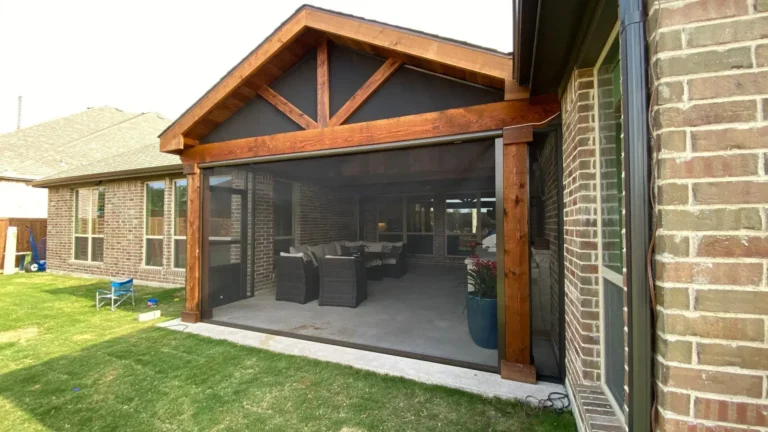
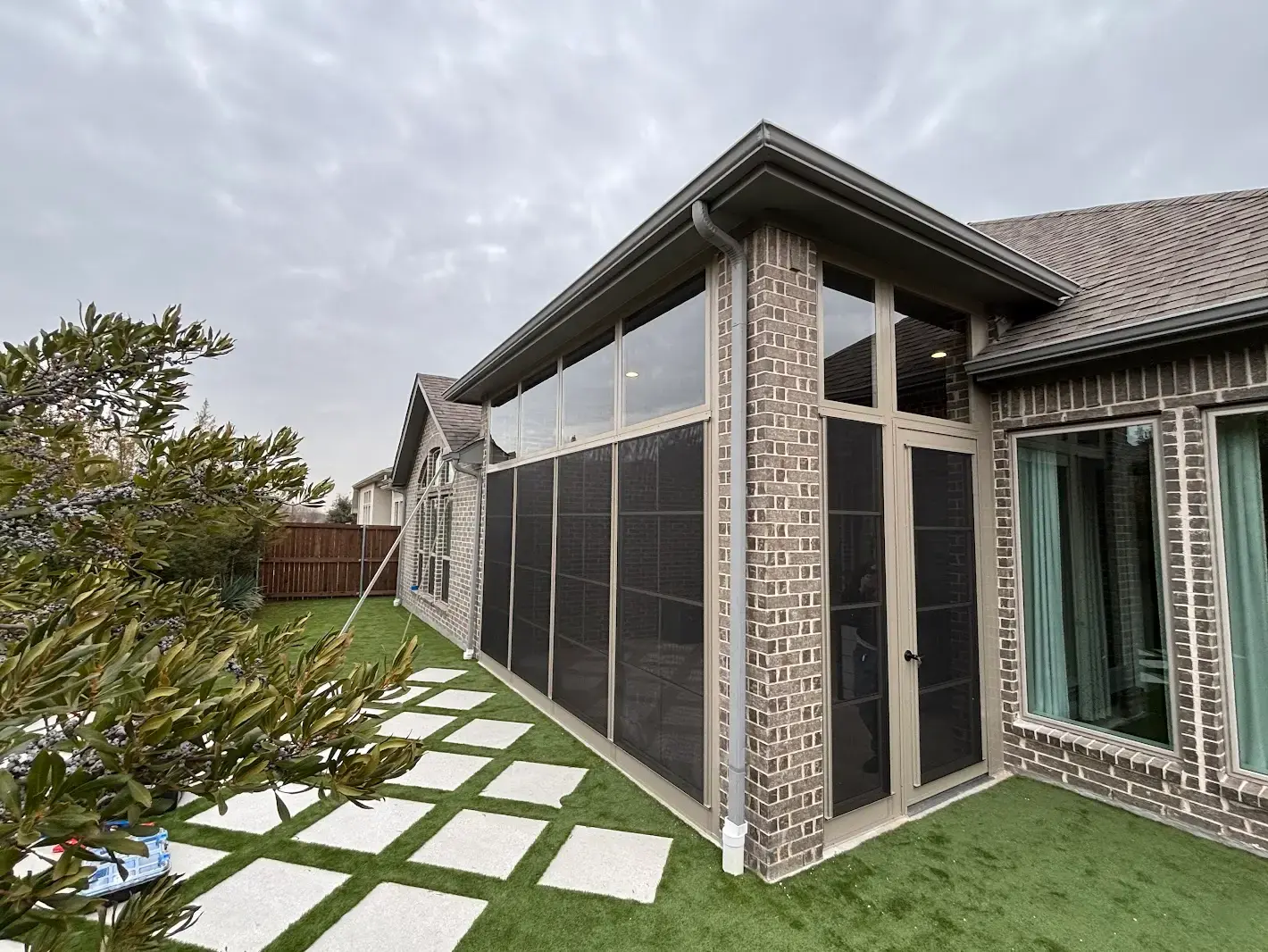
A permanent enclosure, a screen room, a glass enclosure, or a fully enclosed sunroom, is a fixed structure that becomes part of your home. The framing, panels, and roof system are always in place. You open and close windows, doors, or sliding panels within the structure, but the enclosure itself is permanent.
The key advantages of a permanent enclosure:
- Consistent, reliable protection. A screen room keeps insects out every time you walk in, without deploying anything. A glass enclosure seals completely against rain, wind, and dust when panels are closed. You don’t have to think about it; the protection is just there.
- Stronger weather performance. A permanent enclosure handles Collin & Denton Counties’ spring storms, summer heat, and winter cold at a level a retractable screen can’t match. Screen rooms provide full perimeter insect protection and overhead weather coverage. Glass enclosures add wind sealing and meaningful cold-weather performance. Four-season sunrooms deliver full climate control.
- Year-round usability. Depending on the enclosure type, a permanent structure extends your comfortable outdoor season significantly further than a retractable screen system. A glass enclosure is usable for ten to eleven months of the year in Collin & Denton Counties. A retractable screen system is effective during the same months a standard open patio is comfortable, which in Collin & Denton Counties is roughly six to seven months.
- Home value impact. Permanent enclosures add to your home’s appraised value and are a recognized feature for buyers in the Collin & Denton Counties real estate market. Retractable screens are viewed as a patio accessory and typically don’t carry the same appraisal weight.
- Long structural lifespan. Aluminum-framed permanent enclosures last 20 to 30 years with minimal maintenance. The structure outlasts the screen fabric in a retractable system by a significant margin.
The honest trade-offs:
- A permanent enclosure is always there. On a perfect 68°F evening in October, your patio still looks like an enclosed space rather than an open outdoor area. Some homeowners find this constraining compared to the openness a retractable system provides.
- The upfront investment is higher. A screen room starts around $12,000 for a 20×20 space in Collin & Denton Counties. A glass enclosure is a premium product above that range.
- Most permanent enclosures require a building permit in Collin & Denton Counties. Your installer should handle permit filing, but the process adds time to the project.
How They Compare on What Matters Most in Texas
| Factor | Retractable Screens | Permanent Enclosure |
| Insect protection | Good when deployed | Excellent (always on) |
| Rain protection | Partial | Good to excellent |
| Wind protection | Moderate | Good to excellent |
| Summer heat reduction | Moderate (side glare) | Good to excellent |
| Cold weather performance | Minimal | Moderate to excellent |
| Year-round usability | 6 to 7 months | 8 to 12 months |
| Full openness option | Yes, completely | Partial (windows/doors) |
| Home value impact | Low to moderate | Moderate to high |
| Permit required | Usually no | Usually yes |
| Upfront cost | Lower | Higher |
| Structural lifespan | 7 to 15 years (fabric) | 20 to 30 years (frame) |
| Maintenance | Low | Low |
Cost Comparison for Collin & Denton Counties Homeowners
For a standard patio in the Collin & Denton Counties market, here’s where each option typically lands for a comparable coverage area:
| System | Typical Installed Range |
| Motorized retractable screens | $3,000 – $8,000 |
| Screen room (permanent enclosure) | $12,000 – $22,000 |
| Glass enclosure (sliding glass wall) | Premium above screen room range |
| Three-season sunroom | $25,000 – $42,000 |
The cost gap is significant. A retractable screen system is the most accessible entry point for adding meaningful patio protection. But the performance gap is equally significant, particularly in Collin & Denton Counties’ summer heat and winter freeze events, where a permanent enclosure continues to perform, and a retractable screen system largely doesn’t.
For a full breakdown of what drives patio cover and enclosure pricing in Collin & Denton Counties, our article on how much a 20×20 patio cover costs in Collin & Denton Counties covers the cost components in detail.
Which One Fits Your Situation?
Retractable screens are probably the better fit if:
- You love your open patio and want protection only when conditions call for it
- You entertain frequently and want the option of a fully open, unobstructed space for most gatherings
- Budget is a primary consideration, and you want meaningful protection at a lower entry cost
- Your patio already has a solid overhead cover, and you’re adding side protection as a complement
- You’re not ready to commit to a permanent structure but want more usability than a bare open patio
A permanent enclosure is probably the better fit if:
- You want protection that’s always on without deploying or managing anything
- Summer heat and winter freezes in Collin & Denton Counties are the primary things limiting your patio use
- You want to use the space year-round rather than just during Collin & Denton Counties’ comfortable shoulder seasons
- Home value and long-term structural investment matter to your decision
- You’re ready to solve the outdoor living problem permanently rather than partially
Can You Use Both Together?
Yes, and it’s actually one of the most practical setups for a Collin & Denton Counties patio. A permanent overhead structure, a patio cover or a louvered pergola, handles the roof, while motorized retractable screens drop down along the sides on demand. You get consistent overhead weather protection and the option to enclose the sides when mosquitoes, wind, or afternoon sun make it necessary, while keeping the space fully open the rest of the time.
This combination is often more cost-effective than a full permanent perimeter enclosure and gives you more flexibility than either system alone. It’s worth discussing with your installer as an option if you’re drawn to both the openness of retractable screens and the overhead reliability of a permanent cover.
Frequently Asked Questions
How long do motorized retractable screens last in Texas?
Quality motorized screen fabric typically lasts 7 to 15 years in Collin & Denton County conditions, depending on UV exposure and how frequently the screens are deployed and retracted. The aluminum housing and motor components generally outlast the fabric. Fabric replacement is more straightforward and less expensive than replacing a permanent enclosure structure.
Do retractable screens add value to a home in Collin & Denton Counties?
Retractable screens are viewed as a patio accessory by most appraisers rather than a structural addition, so their impact on appraised home value is limited compared to a permanent enclosure. They do add buyer appeal as a convenience feature, particularly in Collin & Denton Counties neighborhoods where outdoor living is a priority for buyers.
Can retractable screens handle Collin & Denton Counties thunderstorms?
Motorized retractable screens deployed during a storm reduce wind-driven rain penetration from the sides, but they aren’t fully weather-sealed. In heavy storms with significant wind, moisture can push through the screen fabric. Most motorized systems also have wind-speed ratings; if winds exceed the rating, screens should be retracted to avoid fabric damage. A permanent enclosure handles Collin & Denton County thunderstorms more reliably.
What’s the maintenance difference between retractable screens and permanent enclosures?
Both are low-maintenance systems. Retractable screen fabric should be cleaned periodically, and the housing checked for debris that could affect the roll mechanism. Permanent enclosure aluminum framing requires occasional cleaning and annual seal inspections. The main maintenance difference is that retractable screen fabric eventually needs replacement, while aluminum enclosure framing does not.
Can I add retractable screens to an existing screen room or permanent enclosure?
It’s an unusual combination since a screen room already provides perimeter enclosure, but motorized screens can be added inside an existing structure in some configurations. More commonly, retractable screens are added to open patio sections adjacent to a permanent enclosure to extend protection without enclosing additional space permanently. Your installer can assess whether it makes sense for your specific layout.
Talk to a Specialist About Your Space
The right answer here depends on how you actually use your patio, which seasons matter most to you, and what level of investment makes sense for your situation. There’s no wrong choice; both systems genuinely improve your outdoor space. The question is how much improvement you want and how you want to get there.
Double T Screened Patios installs both motorized retractable screen systems and permanent enclosures across Collin & Denton Counties. Reach out and let’s figure out which direction makes the most sense for your patio.