Screen Room vs. Glass Enclosure: Which is Better for Year-Round Use in Collin & Denton Counties?
If you’ve already decided you want an enclosed outdoor space, you’re past the easy part of the decision. The harder question is which type of enclosure actually delivers on the promise of year-round usability in a North Texas climate. Two structures come up most often in that conversation: a screen room and a glass enclosure. Both enclose your patio. Both use aluminum framing. Both are permanent structures that add value to your home. But they perform very differently when Collin & Denton Counties’ weather turns extreme in either direction.
This guide compares both options directly on the thing that matters most to you: how well each one holds up across every season in Collin & Denton Counties, and which one fits the way you actually want to use the space. As residential sunroom contractors in Collin & Denton Counties, we install both, and we’ll give you the honest picture on each.
If you’d like to talk through your specific patio before committing to either direction, feel free to reach out to a specialist for a no-pressure conversation.
Two Enclosed Structures, Two Different Levels of Protection
Before getting into seasonal performance, it helps to be precise about what each structure actually is.
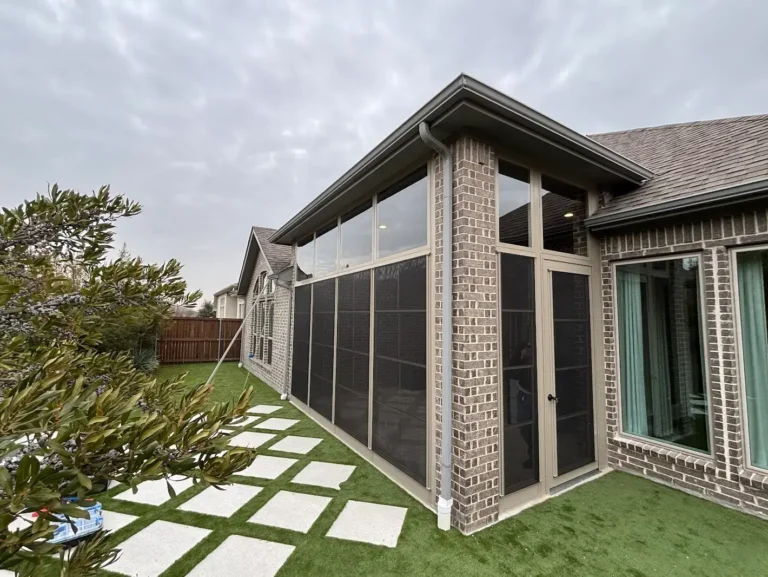
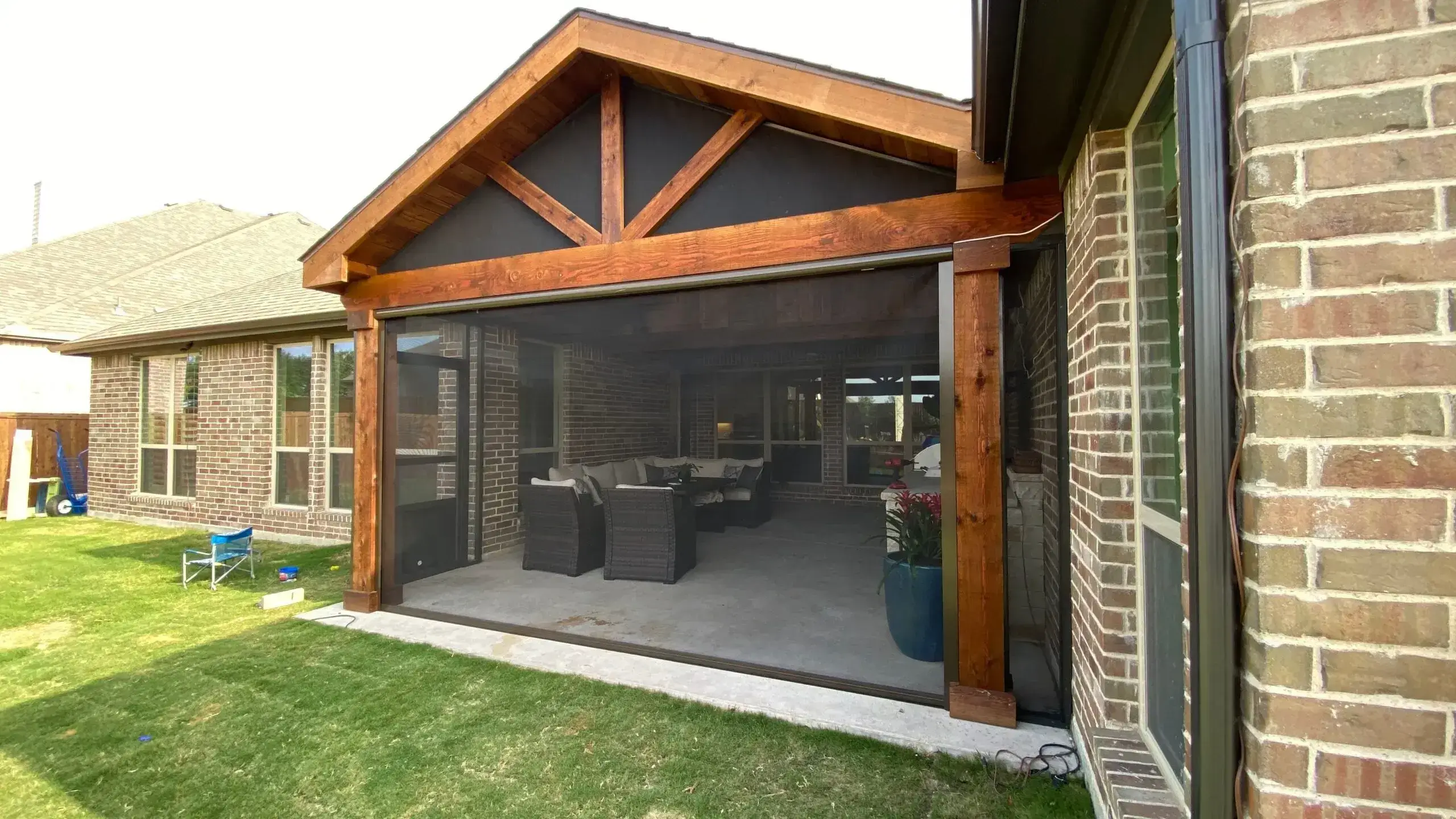
A screen room uses an aluminum frame with fiberglass mesh panels on all sides and a roof system overhead. The mesh keeps insects out and provides partial protection from wind and rain, but it breathes freely and tracks outdoor temperature. It is not weather-sealed or climate-controlled in any meaningful way.
A glass enclosure (like the NovaSun Horizon sliding glass wall system) uses frameless tempered glass panels that slide along precision aluminum tracks. When open, panels stack to one end, and the space is completely open. When closed, concealed seals between panels block rain, wind, dust, and outside noise. The glass panels provide a hard barrier between you and the elements that mesh simply cannot match.
That distinction, breathable mesh vs. sealed glass, drives every performance difference between the two across Collin & Denton Counties’ four seasons.
How a Screen Room Performs Across Collin & Denton Counties Seasons
A screen room’s performance is directly tied to outdoor conditions. Here’s an honest look at each season in Collin & Denton Counties:
Spring (March to May): This is where a screen room genuinely shines. Mild temperatures, pleasant breezes, and heavy pollen make spring the ideal screen room season. The mesh keeps pollen and insects out while letting fresh air flow freely. It’s the most comfortable outdoor space imaginable on a 72°F afternoon.
Summer (June to September): This is where the screen room’s limitations become real. A screen room is essentially at outdoor temperature. On a 103°F afternoon in August, it’s 103°F inside the screen room. Ceiling fans help move air and create a wind-chill effect, but they don’t solve the fundamental problem. Most Collin & Denton Counties homeowners use their screen rooms heavily in the mornings and evenings during summer, but the peak afternoon hours are largely unusable without supplemental cooling.
Fall (October to November): Excellent. Similar to spring, mild temperatures, lower humidity, and fading insect pressure make fall another strong season for screen room use.
Winter (December to February): Collin & Denton Counties’ winters are unpredictable. Hard freezes, ice storms, and wind-chill events happen regularly. A screen room provides no meaningful insulation against cold. During a freeze event, the interior temperature matches the outdoor temperature. The space is effectively unusable during the coldest stretches of the Collin & Denton Counties winter.
Honest assessment: A screen room delivers genuine comfort for roughly six to seven months of the year in Collin & Denton Counties, spring, fall, and the milder portions of winter. It is a seasonal structure, not a year-round one.
How a Glass Enclosure Performs Across Collin & Denton Counties Seasons
A glass enclosure’s performance is shaped by its ability to create a sealed barrier between you and outdoor conditions. Here’s how the NovaSun Horizon system holds up across each Collin & Denton County season:
Spring (March to May): Excellent in both open and closed configurations. Open panels on a pleasant spring morning give you full outdoor airflow and atmosphere. Close them during a spring storm and the space stays completely dry. The concealed seals block pollen when closed, which is a meaningful advantage for allergy sufferers in Collin & Denton Counties’ heavy pollen season.
Summer (June to September): Significantly better than a screen room, but with an important qualification. Closed glass panels block direct sun, wind, and heat penetration meaningfully better than mesh. Combined with ceiling fans or a mini-split unit, a glass enclosure is genuinely comfortable during summer afternoons that would be unusable in a screen room. The 10mm tempered glass provides thermal mass that slows heat transfer. That said, a glass enclosure is not a fully insulated system; it won’t maintain a set temperature the way a four-season sunroom with proper HVAC does. It’s a significant step up from a screen room in summer comfort, but it isn’t air conditioning.
Fall (October to November): Outstanding. The ability to close panels on cool evenings extends the comfortable season meaningfully compared to a screen room, where a cold breeze at 55°F makes the space feel chilly.
Winter (December to February): This is where the glass enclosure creates the most meaningful separation from a screen room. Closed glass panels block wind-chill completely, and the sealed environment retains warmth noticeably better than mesh. During mild Collin & Denton Counties winter days in the 40s and 50s, a glass enclosure with a small space heater or radiant heating panel is genuinely comfortable. During hard freeze events below 25°F, supplemental heating is needed, but the space remains usable in a way a screen room simply isn’t.
Honest assessment: A glass enclosure delivers comfortable use for ten to eleven months of the year in Collin & Denton Counties with appropriate supplemental heating and cooling. It falls short of a fully conditioned four-season sunroom but far exceeds a screen room in year-round performance.
Year-Round Performance Compared Side by Side
| Season | Screen Room | Glass Enclosure |
| Spring | Excellent | Excellent |
| Summer peak heat | Poor without cooling | Good with fans or mini-split |
| Summer mornings/evenings | Good | Excellent |
| Fall | Excellent | Excellent |
| Mild winter days | Moderate | Good with space heater |
| Hard freeze events | Unusable | Usable with supplemental heat |
| Comfortable months per year | 6 to 7 | 10 to 11 |
How They Compare on Comfort, Cost, and Practicality
Year-round usability is the headline difference, but several other factors matter when choosing between the two:
| Factor | Screen Room | Glass Enclosure |
| Insect protection | Excellent | Excellent when closed |
| Rain protection | Good overhead, moderate sides | Excellent when closed |
| Wind protection | Moderate | Excellent when closed |
| Pollen blocking | Good | Excellent when closed |
| Airflow when open | Excellent | Excellent (panels stack fully) |
| Visual openness | Mesh visible | Frameless, unobstructed view |
| Noise reduction | Minimal | Good (10mm glass) |
| Privacy | Moderate | Good |
| Flexibility | Fixed enclosure | Open or closed on demand |
| Typical installed cost (20×20) | $12,000 – $22,000 | Higher (premium product) |
| Maintenance | Low | Low |
| Year-round comfort | Seasonal | Near year-round |
The cost gap is real and worth acknowledging directly. A screen room is the more affordable path to enclosed outdoor living. A glass enclosure is a premium investment that delivers meaningfully more performance, particularly in the summer and winter months when a screen room’s usability drops off.
Which One is Right for Your Situation?
A screen room is probably the better fit if:
- Spring and fall are the seasons you care most about, and you’re comfortable moving indoors during the peak of Collin & Denton Counties summer and hard winter freezes
- Insect protection is your primary goal and year-round usability is secondary
- Budget is a meaningful constraint, and you want maximum enclosed space for the investment
- You prefer the open, mesh-wall feel of a classic screened porch over the more enclosed feel of glass panels
A glass enclosure is probably the better fit if:
- You want to use the space on as many days of the year as possible, including summer afternoons and winter days
- You entertain regularly and want a space that works regardless of what the weather is doing
- The unobstructed, frameless view matters to you aesthetically
- You want the flexibility to open the space completely on perfect days and seal it tight when conditions change
- You’re ready to invest in a structure that performs at a higher level across all four Collin & Denton Counties seasons
Can You Combine Both?
This is worth considering. Some Collin & Denton Counties homeowners install a glass enclosure on the primary entertaining side of their patio for maximum year-round performance, and use a screen room on an adjacent section as a dedicated bug-free zone for warm-weather evenings. The two structures complement each other well when planned together; the glass enclosure handles year-round use and weather extremes, and the screen room handles the open-air, breezy feel that glass panels can’t fully replicate even when open.
If you’re interested in exploring the sliding glass wall system specifically, it’s worth seeing what the NovaSun Horizon looks like on a patio similar to yours before making a final decision.
Frequently Asked Questions
Is a glass enclosure the same as a sunroom?
No. A glass enclosure like the NovaSun Horizon uses sliding frameless glass panels that open and close on demand. A sunroom is a permanently enclosed structure with fixed insulated walls and a roof system. A glass enclosure gives you flexibility between open and closed. A sunroom is always enclosed. For true year-round climate-controlled comfort in Collin & Denton Counties, a four-season sunroom with HVAC is the stronger choice. A glass enclosure sits between a screen room and a sunroom in terms of weather protection and year-round performance.
Can a screen room be upgraded to a glass enclosure later?
Not directly. The framing systems are different, and a screen room isn’t designed to accept glass panel tracks. In most cases, converting a screen room to a glass enclosure approaches the cost of building the glass enclosure from scratch. If you think you’ll want glass panels eventually, building to that spec from the start is the more cost-effective path.
Does a glass enclosure keep bugs out as well as a screen room?
When closed, yes, the sealed glass panels and concealed seals create a complete barrier against insects. When open with panels stacked, the space is fully exposed just like an open patio. A screen room provides continuous insect protection whenever you’re in the space, regardless of whether you want airflow or not. For pure bug protection as the primary goal, a screen room is the more consistent performer.
Which holds up better to Collin & Denton Counties hailstorms, a screen room or a glass enclosure?
The aluminum framing on both structures handles hail well. Screen mesh can be punctured by large hail and may need panel replacement after a severe storm. The 10mm tempered glass on the NovaSun Horizon is significantly more impact-resistant than screen mesh and is engineered to handle severe weather conditions without damage in most storm events.
Do I need a permit for either structure in Collin & Denton Counties?
Yes, in most Collin & Denton Counties municipalities. Both screen rooms and glass enclosures are classified as permanent structures and require a building permit. Requirements vary by city. Double T Screened Patios handles permit research and filing as part of every installation, so you don’t have to manage the process yourself.
Talk to a Specialist About Your Specific Space
The right choice between a screen room and a glass enclosure comes down to how many months you want to use the space, what Collin & Denton Counties’ season bothers you most on your current open patio, and what your budget looks like. Both are strong investments. They just deliver at different levels.
Double T Screened Patios installs both screened rooms and glass enclosures across Collin & Denton Counties. Reach out and let’s have an honest conversation about which direction makes the most sense for your home.