Sunroom vs. Screened Patio: Pros, Cons, and Which Is Right for Your Texas Home
Both a sunroom and a screened patio give you more usable outdoor space. Both use aluminum framing, both attach to your home, and both are significant upgrades over a bare concrete slab. But they sit at very different points on the spectrum of outdoor living, and choosing between them is one of the bigger decisions a Collin & Denton Counties homeowner can make for their backyard.
A screened patio keeps you connected to the outdoors while blocking insects and some weather. A sunroom puts you inside a fully enclosed, climate-controlled room that happens to have views of the yard. The right choice depends on how you want to use the space, how much of the year you want to use it, and what your budget looks like. As Sunroom Builders in Collin & Denton Counties, we’ve helped homeowners work through this decision for over a decade. Here’s what actually matters.
If you’d like to talk through your specific situation before making any decisions, feel free to reach out to a specialist.
Understanding What Each Structure Actually Is
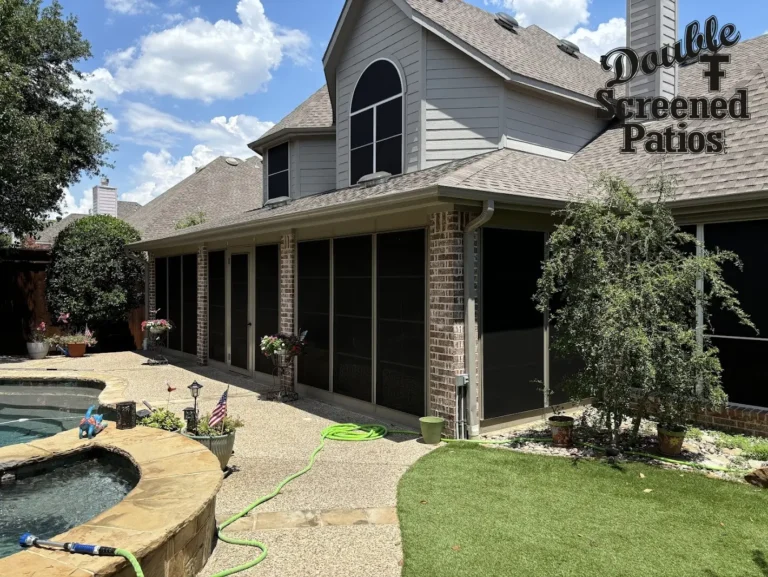
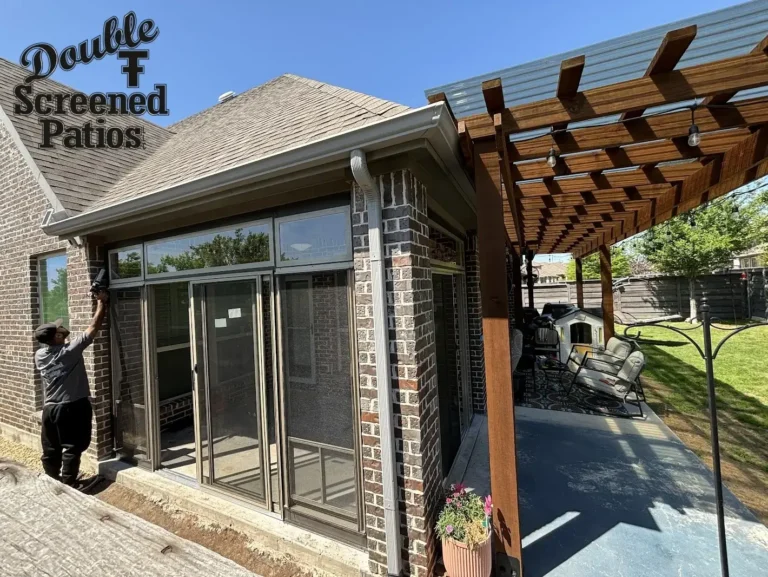
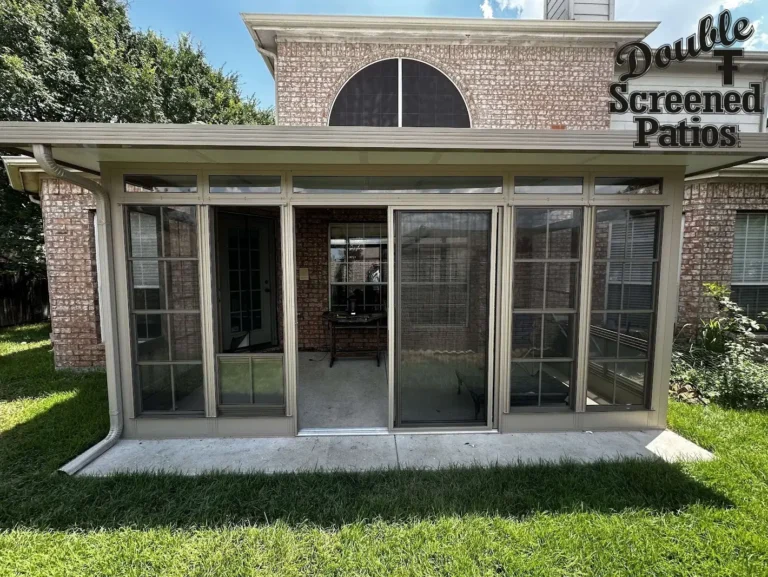
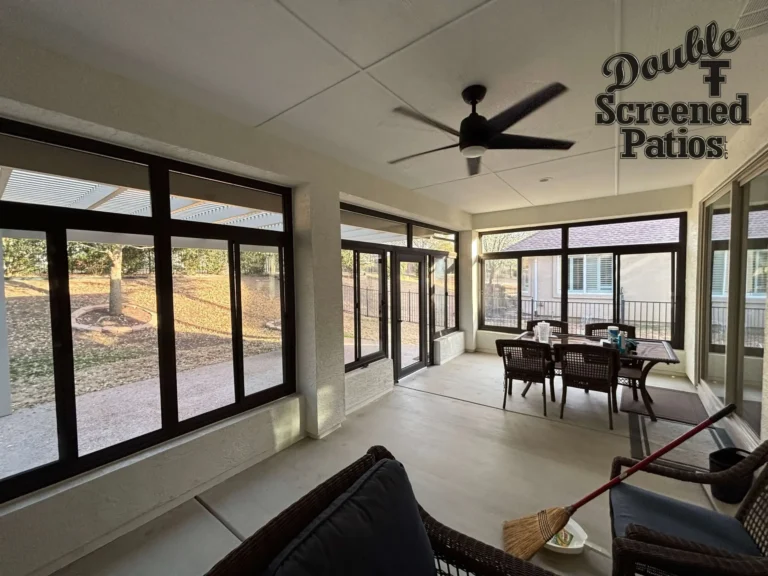
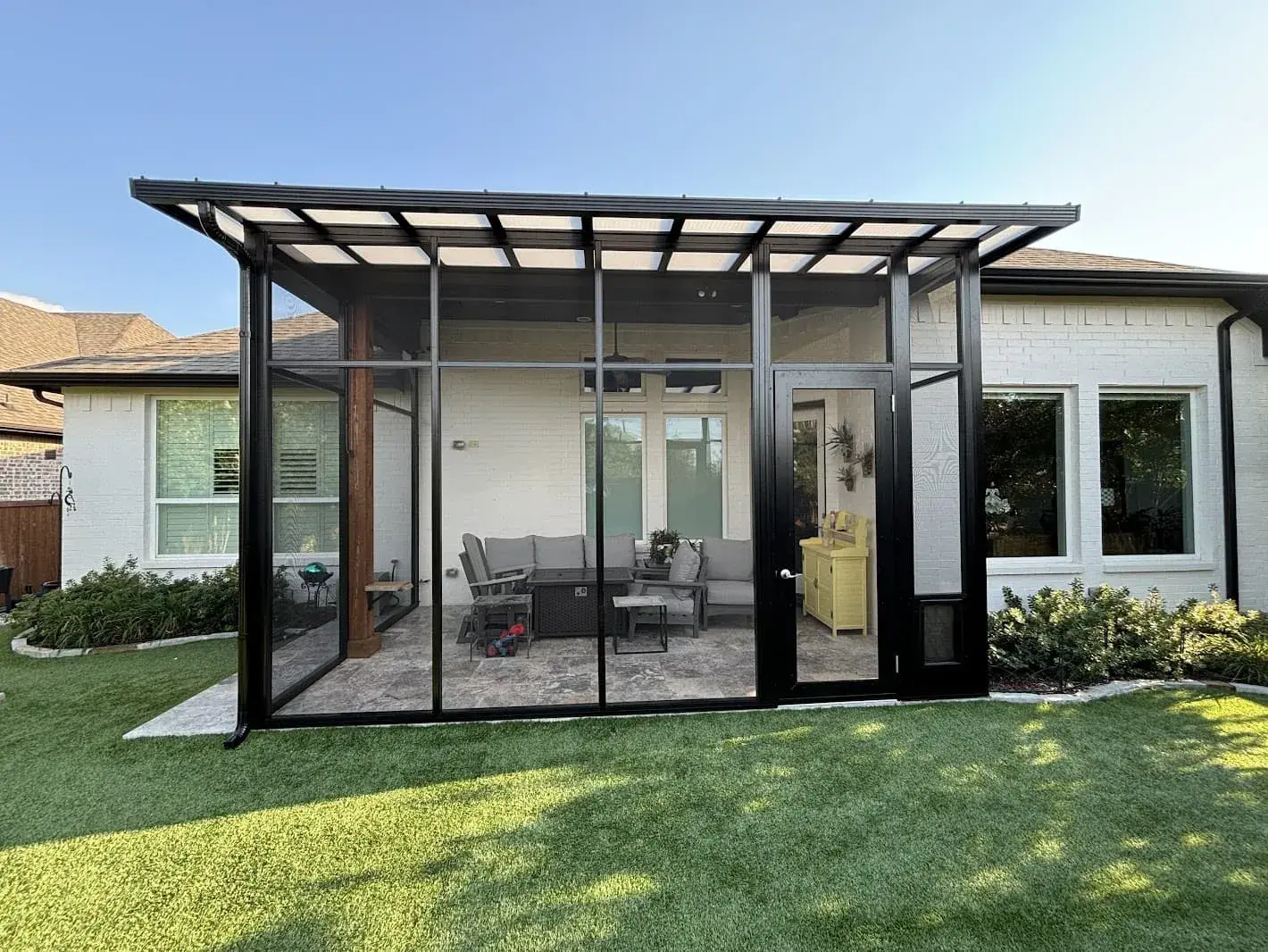
A screened patio (also called a screen room or screened enclosure) uses an aluminum frame with fiberglass mesh panels on all sides and a roof overhead. The space is fully enclosed from insects and partially protected from wind and rain, but it breathes freely and stays connected to the outdoor temperature. It’s not climate-controlled.
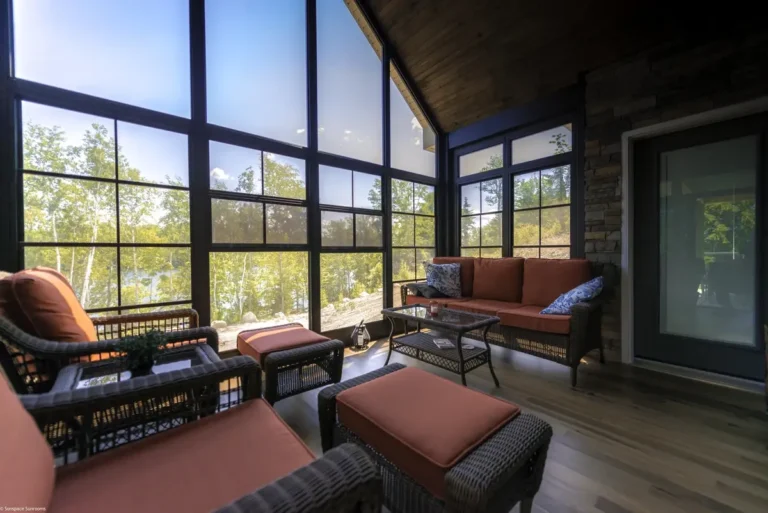
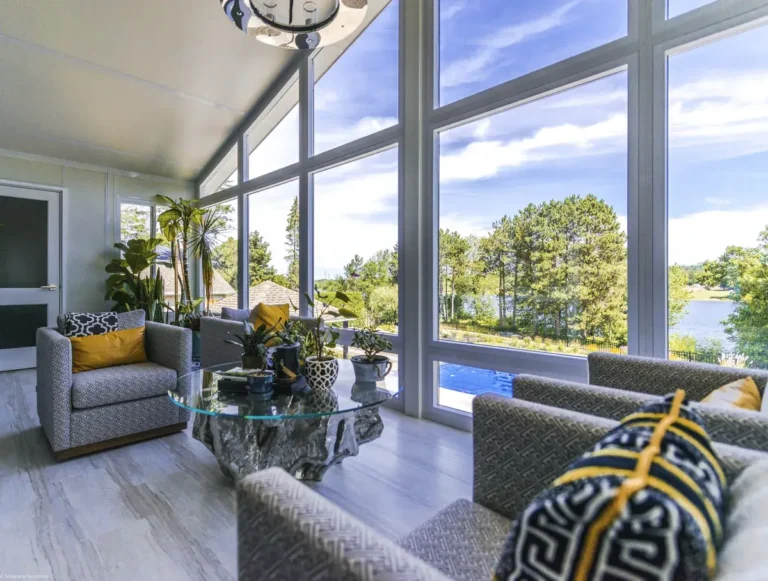
A sunroom is a fully enclosed glass and aluminum structure with insulated roof panels and operable window systems. Depending on the model, it can be used as a three-season room (comfortable in mild weather without HVAC) or a four-season room (fully conditioned and usable year-round). It’s a true room addition to your home.
That fundamental difference, open-air enclosure vs. climate-controlled room, drives almost every other distinction between the two.
Pros and Cons of a Screened Patio
A screened patio is the more accessible entry point into enclosed outdoor living. Here’s an honest look at both sides.
Pros:
- Complete insect protection: Mosquitoes, flies, and other insects are completely eliminated inside a properly installed screen room. In Collin & Denton Counties, where mosquito season runs from April through October, this is a genuinely significant quality-of-life improvement.
- Lower cost: A screened enclosure is the most affordable fully enclosed outdoor structure. For a 20×20 space in Collin & Denton Counties, installed costs typically start around $12,000, which is well below what a comparable sunroom costs.
- Open, outdoor feel: The mesh panels let air, sound, and the sense of the outdoors flow through freely. Many homeowners prefer this to the more enclosed feel of a sunroom.
- Simpler installation: Screen rooms don’t require HVAC integration, complex foundation work, or insulated wall systems. The installation process is relatively straightforward.
- Low maintenance: Aluminum frames don’t rot or corrode, and mesh panels are inexpensive to replace when needed.
Cons:
- Not climate-controlled: A screened patio is essentially at outdoor temperature. On a 100°F July afternoon in Collin & Denton Counties, it’s hot inside. On a cold January night, it’s cold. Ceiling fans help in summer, but the space is largely seasonal in Texas’s extremes.
- Limited weather protection on the sides: Wind-driven rain in a strong storm can push through screen panels, leaving interior surfaces wet.
- Less privacy than a sunroom. Mesh panels reduce sightlines but don’t eliminate them. A screened patio still feels visible from neighboring yards in a way a sunroom doesn’t.
- No added square footage for appraisal: Screen rooms typically don’t count as conditioned square footage for home appraisal purposes.
Pros and Cons of a Sunroom
A sunroom is a larger investment that delivers a fundamentally different level of comfort and utility. Here’s the honest breakdown.
Pros:
- Year-round usability: A four-season sunroom with proper insulation and HVAC integration is completely comfortable on the hottest Collin & Denton Counties summer days and the coldest winter nights. It adds a genuinely usable room to your home for all 12 months.
- True room addition: A well-built sunroom functions as a bonus living space, a home office, a playroom, or a dining room. It can be furnished, decorated, and used exactly like any other room in the house.
- Significant home value addition: A fully conditioned sunroom adds to your home’s assessed square footage and is a strong selling point in the Collin & Denton Counties real estate market.
- Complete weather and insect protection: Sealed window and door systems keep out insects, rain, wind, and temperature extremes completely.
- Better privacy: Glass panels with optional sunshades provide significantly more visual privacy than screen mesh.
Cons:
- Higher cost: A 20×20 three-season sunroom in Collin & Denton Counties typically starts around $25,000, and a four-season insulated model can run from $40,000 to $70,000. The investment is substantially larger than a screen room.
- Longer project timeline: Sunrooms require permits, engineered drawings in many Collin & Denton County cities, custom fabrication, and more complex installation. The overall project window is typically 12 to 18 weeks from contract to completion.
- Less outdoor feel: Some homeowners find a sunroom feels more like an indoor room than an outdoor space. If staying connected to the sounds and feel of the yard matters to you, a screen room delivers that more naturally.
- HVAC and electrical considerations: A four-season sunroom needs to be integrated into your home’s HVAC system or have its own dedicated unit, which adds to both upfront cost and ongoing energy bills.
How They Compare on What Matters Most in Texas
| Factor | Screened Patio | Sunroom |
| Insect protection | Excellent | Excellent |
| Year-round comfort | Seasonal | Year-round |
| Climate control | None | Full (4-season model) |
| Weather protection | Good overhead, moderate sides | Excellent on all sides |
| Outdoor feel | High | Moderate |
| Privacy | Moderate | High |
| Home value impact | Moderate | High |
| Installation complexity | Lower | Higher |
| Typical starting cost (20×20) | $12,000 | $25,000 |
Cost Comparison for Collin & Denton Counties Homeowners
For a standard 20×20 footprint in the Collin & Denton Counties market, here’s where each option typically lands:
| Structure | Typical Installed Range |
| Screened patio enclosure | $12,000 – $22,000 |
| Three-season sunroom | $25,000 – $42,000 |
| Four-season insulated sunroom | $40,000 – $70,000 |
The cost gap between a screen room and a four-season sunroom at the same square footage can be $30,000 or more. That’s a meaningful difference, and it’s worth being honest with yourself about whether you’ll actually use a fully conditioned room enough to justify the investment. For a full breakdown of sunroom pricing by type, our article on how much a 20×20 sunroom costs in Collin & Denton Counties covers each model in detail.
Which One Fits Your Lifestyle?
A screened patio is probably the better fit if:
- Your primary complaint about being outdoors is mosquitoes and insects
- You love the open, connected-to-the-yard feeling and don’t want to give it up
- You plan to use the space mainly in spring and fall when Collin & Denton Counties weather is pleasant
- Budget is a meaningful constraint, and you want maximum space for the investment
- You want a simpler, faster project with less disruption to your home
A sunroom is probably the better fit if:
- You want a space you can use comfortably every single day of the year
- You’re looking for a true room addition that adds square footage and home value
- You want to furnish it fully and use it as a home office, playroom, or living space
- You entertain year-round and need a climate-controlled space for guests
- You’re ready to make a larger investment for a longer-term payoff
Can You Start with One and Upgrade Later?
This is a question we hear often. The honest answer is that upgrading a screened patio to a sunroom later is possible in some configurations but rarely cost-effective. The wall systems, roof panels, window units, and foundation requirements for a sunroom are fundamentally different from a screen room. In most cases, a conversion approaches the cost of building a sunroom from scratch.
If you think your needs might grow into a sunroom over time, it’s worth having that conversation with your installer upfront. A screen room built with future expansion in mind is a different project than one built as a permanent standalone structure. And if a sunroom is genuinely where you want to end up, a sunroom installation from the start is almost always the smarter financial path.
Frequently Asked Questions
Which is easier to get approved by an HOA in Collin & Denton Counties, a sunroom or a screened patio?
It varies by HOA, but screened patios are generally simpler to get approved because they’re less visually prominent than a sunroom addition. Sunrooms change the roofline and exterior profile of a home, which some HOAs have specific guidelines around. Both typically require HOA approval before permit filing. Your installer should help you navigate the HOA submission process.
Does a sunroom or a screened patio cool down faster on a hot Texas day?
A four-season sunroom with air conditioning cools down to a set temperature and stays there, regardless of outdoor heat. A screened patio relies on airflow and ceiling fans and will always track close to outdoor temperatures. For true relief from Collin & Denton Counties’ summer heat, a climate-controlled sunroom wins clearly. For a space that breathes and feels outdoors, a screened room with a ceiling fan is genuinely comfortable in the mornings and evenings even in summer.
Can I put furniture in a screened patio or does it need to be outdoor-rated?
Outdoor-rated or weather-resistant furniture is still the smarter choice for a screened patio because humidity, temperature swings, and occasional moisture from rain can still affect interior surfaces. A sunroom, especially a four-season model, is climate-controlled enough that standard indoor furniture works without concern.
How long does it take to install a screened patio vs. a sunroom?
A screen room installation on a straightforward site typically takes one to three days once materials are on hand, with a shorter overall project window. A sunroom is a longer commitment, with an overall timeline of 12 to 18 weeks from contract to completion covering design, permitting, fabrication, and installation.
Is a sunroom or a screened patio better for resale value in Texas?
A four-season sunroom adds conditioned square footage and tends to have a stronger impact on appraised home value. A screened patio is a lifestyle upgrade that resonates with buyers but doesn’t always add to the appraised square footage. Both are viewed positively by Collin & Denton Counties buyers. If maximizing appraised value is the goal, a sunroom is the stronger choice. If maximizing buyer appeal for the budget spent, a screened room is very competitive.
Talk to Someone Who Knows Both
The right choice between a sunroom and a screened patio comes down to how you actually live and what you realistically need from the space. Neither is the wrong answer. They just deliver very different things.
Double T Screened Patios installs both screened enclosures and sunrooms across Collin & Denton Counties. Reach out and let’s have an honest conversation about which direction makes the most sense for your home and your budget.