Three-Season Room vs. Four-Season Sunroom: What’s the Difference?
If you’ve decided you want a sunroom, you’ve probably run into these two terms and wondered what the actual difference is. Three-season room. Four-season sunroom. Both sound like enclosed outdoor spaces with lots of glass. Both attach to your home. Both are significant investments. But they’re built differently, perform differently, and suit different lifestyles.
The distinction matters a lot in Collin & Denton Counties. Collin & Denton Counties don’t have gentle weather. Summers push past 100°F for weeks at a time, and winters bring ice storms and hard freezes that catch people off guard. Choosing the wrong sunroom type for this climate is a frustrating and expensive mistake. As residential sunroom contractors in Collin & Denton Counties, we want to help you get this decision right from the start.
If you’d like to talk through your specific project before committing to either direction, feel free to reach out to a specialist.
Same Category, Very Different Structures
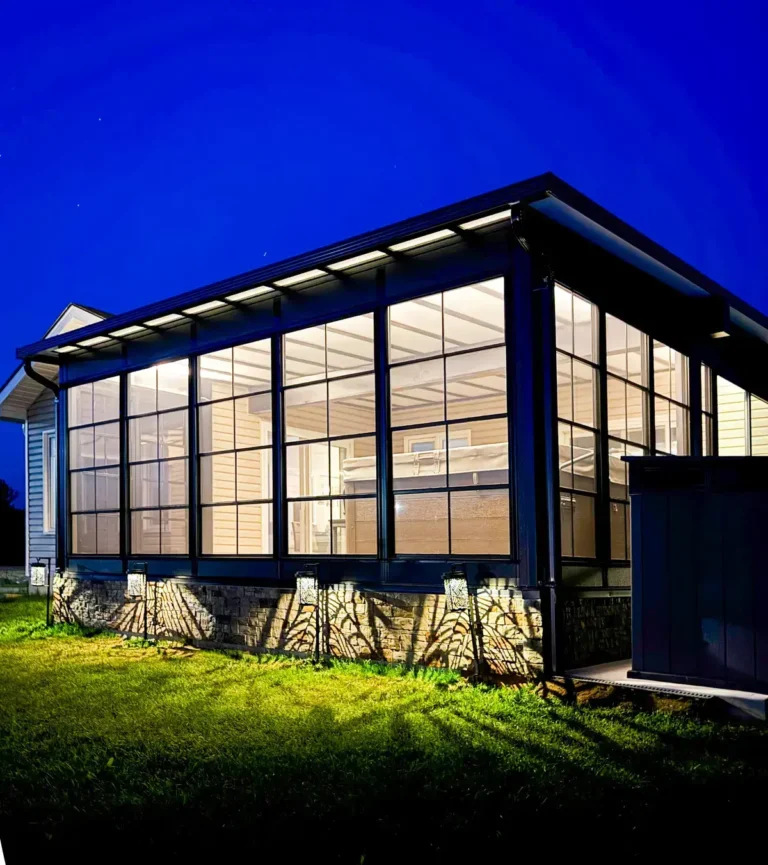
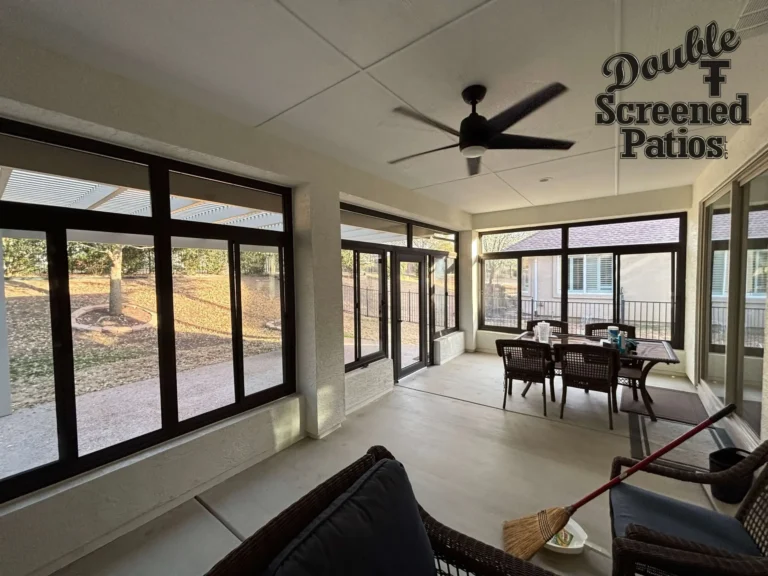
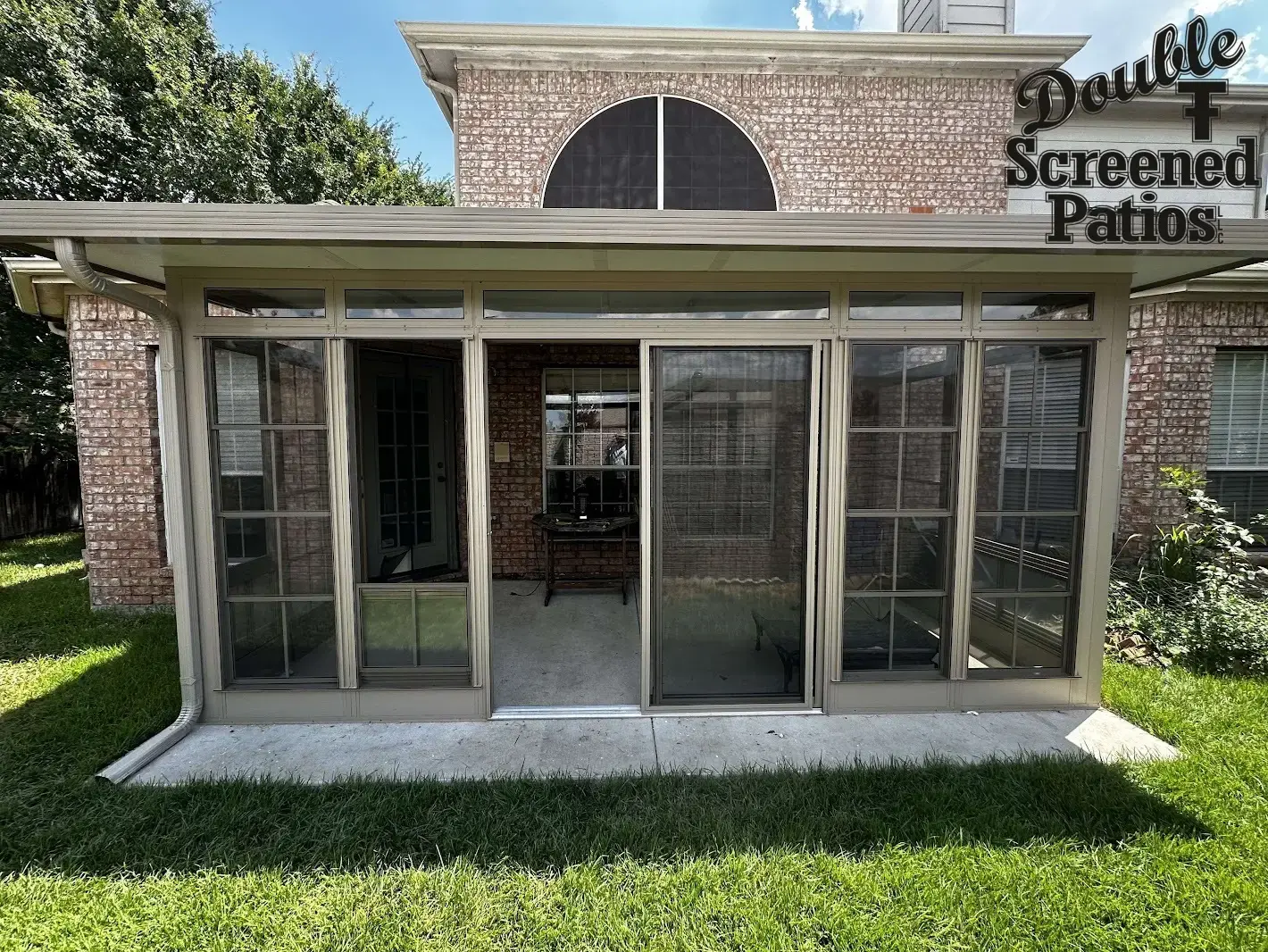
Both three-season rooms and four-season sunrooms are fully enclosed glass-and-aluminum structures attached to your home. They both protect you from insects, weather, and the elements. They both use aluminum framing, operable windows, and insulated roof systems.
The fundamental difference is thermal performance. A three-season room is built for comfort in mild to moderate weather. A four-season sunroom is built to maintain a stable indoor temperature regardless of what’s happening outside. That single distinction drives nearly every other difference between the two, from wall construction to window specs to foundation requirements to cost.
What Makes a Room “Three-Season”
A three-season room uses extruded insulated aluminum pillars with single-glazed glass windows. The windows are operable on both sides, which gives you good ventilation on pleasant days. The roof system uses 4″ or 6″ insulated foam core panels laminated with aluminum skins, providing solid overhead protection and decent thermal resistance.
The wall system has meaningful insulation, but it’s not designed to maintain a comfortable temperature when it’s 105°F outside or 20°F overnight. On a mild Collin & Denton Counties spring afternoon, a three-season room is genuinely comfortable without any heating or cooling. On a July afternoon or a January ice storm, it’s not.
The name “three-season” reflects reality in most of the country. In Collin & Denton Counties specifically, those three comfortable seasons are spring, fall, and the milder parts of winter. Summer is largely excluded unless you add a portable AC unit or ceiling fans to take the edge off.
What Makes a Room “Four-Season”
A four-season sunroom is engineered for full climate control. The wall system uses high-density 3″ foam panels with heavy-gauge aluminum extrusions that provide significantly stronger thermal resistance than a three-season wall. The windows are high-efficiency units with Low-E Argon gas fills, which dramatically reduce heat transfer through the glass in both summer and winter.
The structure is designed to be connected to your home’s existing HVAC system or fitted with a dedicated mini-split unit. With proper HVAC integration, a four-season sunroom maintains a stable, comfortable temperature year-round, cool in July, warm in January, just like any other room in your house.
The foundation requirements are also more substantial. A four-season room carries more structural load and needs a properly engineered foundation to support the heavier wall and roof system. Therma-Deck insulated flooring panels are often incorporated to add another layer of thermal protection at the floor level.
How Collin & Denton Counties Climate Affects the Choice
This is where the Collin & Denton Counties context matters more than most national guides acknowledge. In a mild climate like the Pacific Northwest, a three-season room might comfortably serve nine or ten months of the year. In Collin & Denton Counties, the usable window is narrower.
Here’s how each sunroom type holds up across Collin & Denton Counties’ seasons:
| Season | Three-Season Room | Four-Season Sunroom |
| Spring (March–May) | Very comfortable | Very comfortable |
| Summer (June–Sept) | Hot; fans help minimally | Fully comfortable with HVAC |
| Fall (Oct–Nov) | Very comfortable | Very comfortable |
| Winter (Dec–Feb) | Cold during freezes | Fully comfortable with HVAC |
In practice, a three-season room in Collin & Denton Counties is genuinely comfortable for roughly six to seven months of the year. A four-season sunroom is comfortable for all twelve. If you’re investing in a sunroom to use it heavily, that gap is worth thinking through honestly before you commit.
Pros and Cons of a Three-Season Room
Pros:
- Lower cost: A three-season room is significantly less expensive than a four-season model at the same square footage. For a 20×20 space in Collin & Denton Counties, you’re typically looking at $25,000 to $42,000 installed, compared to $40,000 to $70,000 for a four-season room.
- Faster project timeline: Less complex foundation and wall system requirements mean a shorter overall build window.
- Excellent spring and fall usability: In Collin & Denton Counties’ shoulder seasons, a three-season room is one of the most pleasant spaces imaginable, fully enclosed, bright, airy, and connected to the outdoors without the bugs or heat.
- Good ventilation: Double roller windows that open on both sides create excellent cross-ventilation on mild days.
- Lower ongoing energy cost: No HVAC integration means no added energy consumption year-round.
Cons:
- Not usable in Collin & Denton Counties in summer without supplemental cooling: This is the honest reality. A three-season room in Collin & Denton Counties in July is hot. Ceiling fans and portable units help, but they don’t solve the problem the way a conditioned room does.
- Uncomfortable during hard freezes: Collin & Denton Counties gets genuine winter weather. A three-season room during a freeze event is cold enough to be unusable and requires protecting any plants or water features inside.
- Can’t count as conditioned square footage: Without HVAC integration, a three-season room typically doesn’t add to your home’s conditioned square footage for appraisal purposes.
Pros and Cons of a Four-Season Sunroom
Pros:
- True year-round usability: This is the defining advantage. A four-season sunroom in Collin & Denton Counties is comfortable every day of the year, including the worst of summer and the hardest winter freezes.
- Functions as a genuine room addition: It can serve as a home office, a playroom, a dining room extension, or a primary living space. It’s not an outdoor structure; it’s a room.
- Adds conditioned square footage: A properly built four-season sunroom adds to your home’s appraised square footage, which has a direct impact on home value.
- Complete thermal comfort: High-efficiency Low-E Argon windows and insulated wall panels keep heat out in summer and cold out in winter at a level a three-season room simply can’t match.
- Strong resale appeal: In Collin & Denton Counties’ real estate market, a four-season sunroom is a compelling feature for buyers who want year-round bonus space.
Cons:
- Higher upfront cost: The investment is substantially larger. At $40,000 to $70,000 for a 20×20 room, it’s a significant financial commitment.
- Longer project timeline: Engineering requirements, permit complexity, foundation work, and HVAC integration all add time. The overall window is typically 12 to 18 weeks from contract to completion.
- Ongoing HVAC cost: A conditioned room adds to your home’s heating and cooling load. Modern insulated systems are efficient, but it’s an added energy expense year-round.
- More complex installation: Foundation requirements, wall system engineering, and HVAC integration make this a more involved project than a three-season room.
How They Compare Side by Side
| Factor | Three-Season Room | Four-Season Sunroom |
| Wall insulation | Moderate | High |
| Window type | Single-glazed | Low-E Argon glass |
| HVAC integration | No | Yes |
| Year-round comfort in Collin & Denton Counties | No | Yes |
| Usable months in Collin & Denton Counties | 6 to 7 | 12 |
| Adds conditioned sq footage | No | Yes |
| Home value impact | Moderate | High |
| Foundation complexity | Moderate | Higher |
| Typical installed cost (20×20) | $25,000 – $42,000 | $40,000 – $70,000 |
| Project timeline | Shorter | 12 to 18 weeks |
Cost Comparison in the Collin & Denton Counties Market
The cost gap between a three-season room and a four-season sunroom at the same square footage is real and meaningful. For a 20×20 footprint in Collin & Denton Counties:
- Three-season room: $25,000 to $42,000 installed
- Four-season insulated sunroom: $40,000 to $70,000 installed
The overlap zone in the middle reflects the fact that a large, complex three-season room can approach the starting price of a simpler four-season build. At those crossover price points, the four-season room is almost always the better investment because you’re getting significantly more performance for a similar spend.
For a full breakdown of what drives sunroom pricing across all model types, our article on how much a 20×20 sunroom costs in Collin & Denton Counties covers each option in detail.
Which One is Right for You?
A three-season room is probably the better fit if:
- Spring and fall are the seasons you care most about, and Collin & Denton Counties summer heat doesn’t bother you as long as you’re inside your main house
- Budget is a meaningful constraint, and the cost difference between the two options is significant for your situation
- You want a space that feels like an outdoor room rather than an indoor addition
- You plan to use it primarily for morning coffee, casual reading, and mild-weather entertaining
A four-season sunroom is probably the better fit if:
- You want to use the space every single day of the year without thinking about the weather outside
- You’re looking for a true room addition that adds to your home’s value and conditioned square footage
- You work from home and need a comfortable, dedicated space year-round
- You’re ready to make a larger investment for a space that genuinely performs like a room in your house
Can a Three-Season Room Be Upgraded to Four-Season Later?
This question comes up often, and the honest answer is: it’s complicated. The wall systems, window units, foundation specs, and HVAC requirements for a four-season room are different enough from a three-season build that a true conversion is rarely straightforward or cost-effective.
In most cases, upgrading a three-season room to four-season performance approaches the cost of building a four-season room from scratch. If you think there’s any chance you’ll want four-season performance down the road, building to that spec from the start is the smarter financial path.
A sunroom installation built to four-season specs from day one avoids the frustration and added cost of a later conversion. It’s worth having that conversation with your installer before you settle on a model.
Frequently Asked Questions
Can I add a portable AC unit to a three-season room to use it in Collin & Denton Counties summer?
You can, and many homeowners do. A portable AC unit or a window unit helps take the edge off, but it’s an imperfect solution. Three-season wall systems aren’t designed to retain conditioned air efficiently, so the unit works harder and costs more to run than it would in a properly insulated room. It’s a workable short-term approach but not a long-term substitute for a four-season build.
Do I need a separate HVAC unit for a four-season sunroom or can it tie into my existing system?
It depends on your home’s existing HVAC capacity. Some systems have enough headroom to handle the added load of a 400 sq ft sunroom with proper insulation. Others need a dedicated mini-split unit for the sunroom space. Your installer should assess your existing system as part of the project planning process.
Does a three-season room require a building permit in Collin & Denton Counties?
Yes. Both three-season rooms and four-season sunrooms are classified as permanent additions and require a building permit in virtually all Collin & Denton Counties municipalities. Four-season rooms often also require engineered drawings given their structural complexity. Your installer should handle permit filing as part of the project.
Which holds up better in Collin & Denton Counties hailstorms, a three-season or four-season sunroom?
Both use aluminum framing that handles hail well without structural damage. The difference is in the glass and roof panels. Four-season sunrooms use heavier-duty window units that are more impact-resistant than the single-glazed panels in a three-season room. Neither is completely immune to large hail, but the four-season build is generally more durable in severe weather.
Is a three-season room considered part of my home’s living space for insurance purposes?
This varies by insurer and by how the room is classified on your permit. A three-season room without HVAC integration is typically classified differently from a fully conditioned addition. It’s worth contacting your homeowner’s insurance provider before the project starts to confirm how the addition will affect your policy and coverage.
Ready to Move Forward?
Whether a three-season room or a four-season sunroom is the right fit for your home, the next step is getting a site-specific assessment and an honest quote based on your actual project. National pricing guides and general comparisons only get you so far.
Double T Screened Patios installs both three-season rooms and four-season sunrooms across Collin & Denton Counties. Reach out and let’s talk through which option makes the most sense for your home, your lifestyle, and your budget.