Screened Patio vs. Pergola: Which is Better for Texas?
If you’ve been trying to decide between a screened patio enclosure and a pergola for your Collin & Denton Counties backyard, you’re not alone. These are the two most common directions homeowners go when they want covered outdoor space, and they’re more different than they look at first glance. One seals you in. The other keeps you open. In Texas, that distinction matters a lot.
This isn’t a question with a single right answer. It depends on how you use your outdoor space, what bothers you most about the Texas climate, and how much flexibility you want year-round. As porch and sunroom services providers in Collin & Denton Counties, we’ve helped homeowners work through this exact decision for over a decade. Here’s what actually matters when comparing the two.
If you’d like to talk through your specific backyard before making any decisions, feel free to reach out to a specialist.
Two Good Options, Two Different Answers
Before getting into specifics, it helps to be clear about what each structure actually is.
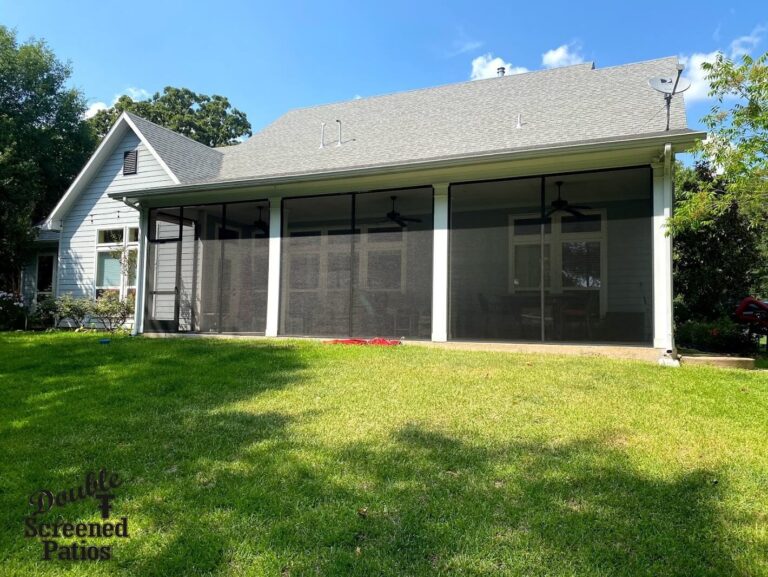
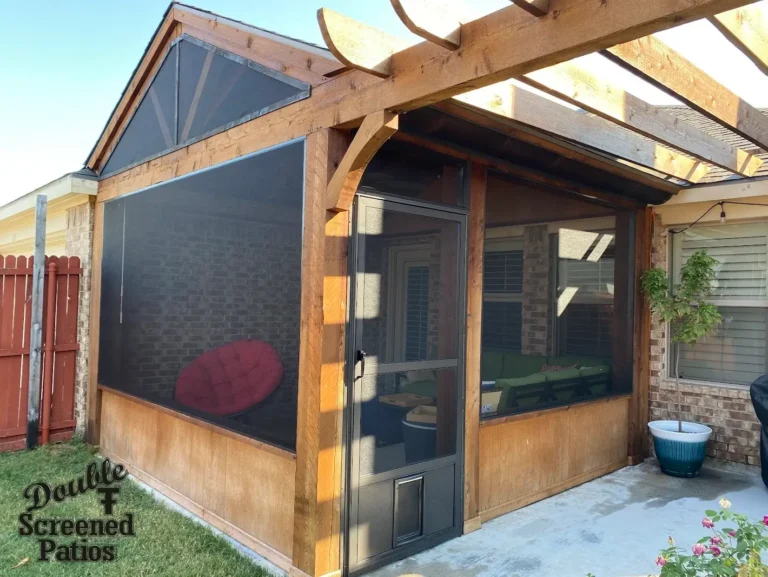
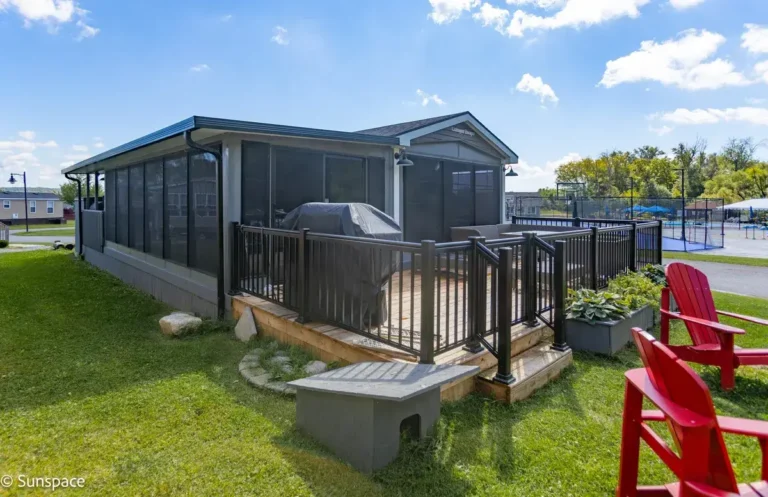
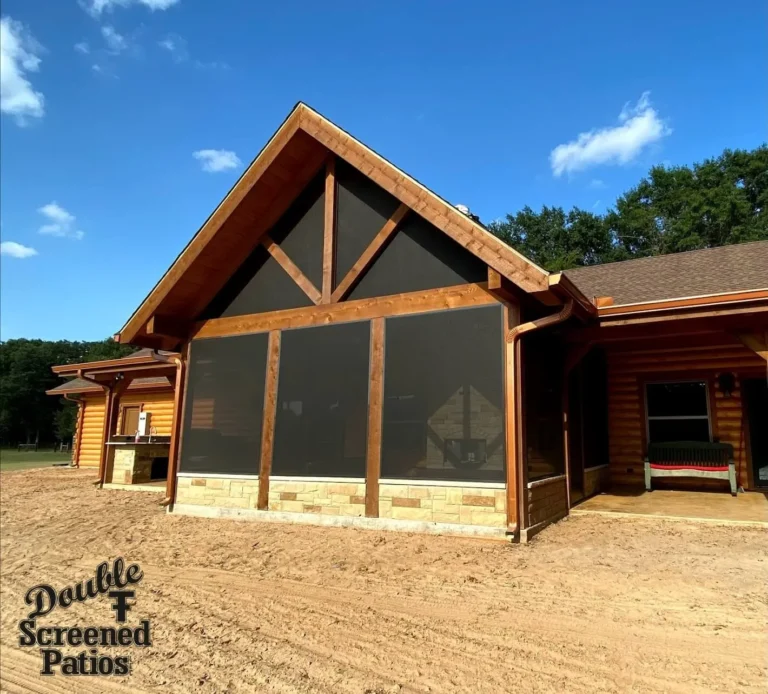
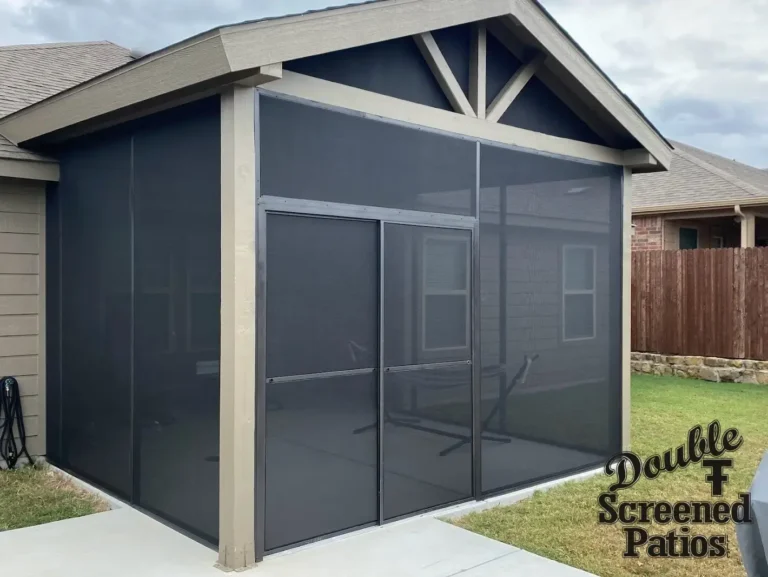
A screened patio enclosure (also called a screen room) uses an aluminum frame with fiberglass mesh panels to fully enclose your patio on all sides. You get a ceiling overhead, screens on every wall, and a door to enter and exit. The space feels outdoors but is fully separated from the elements.
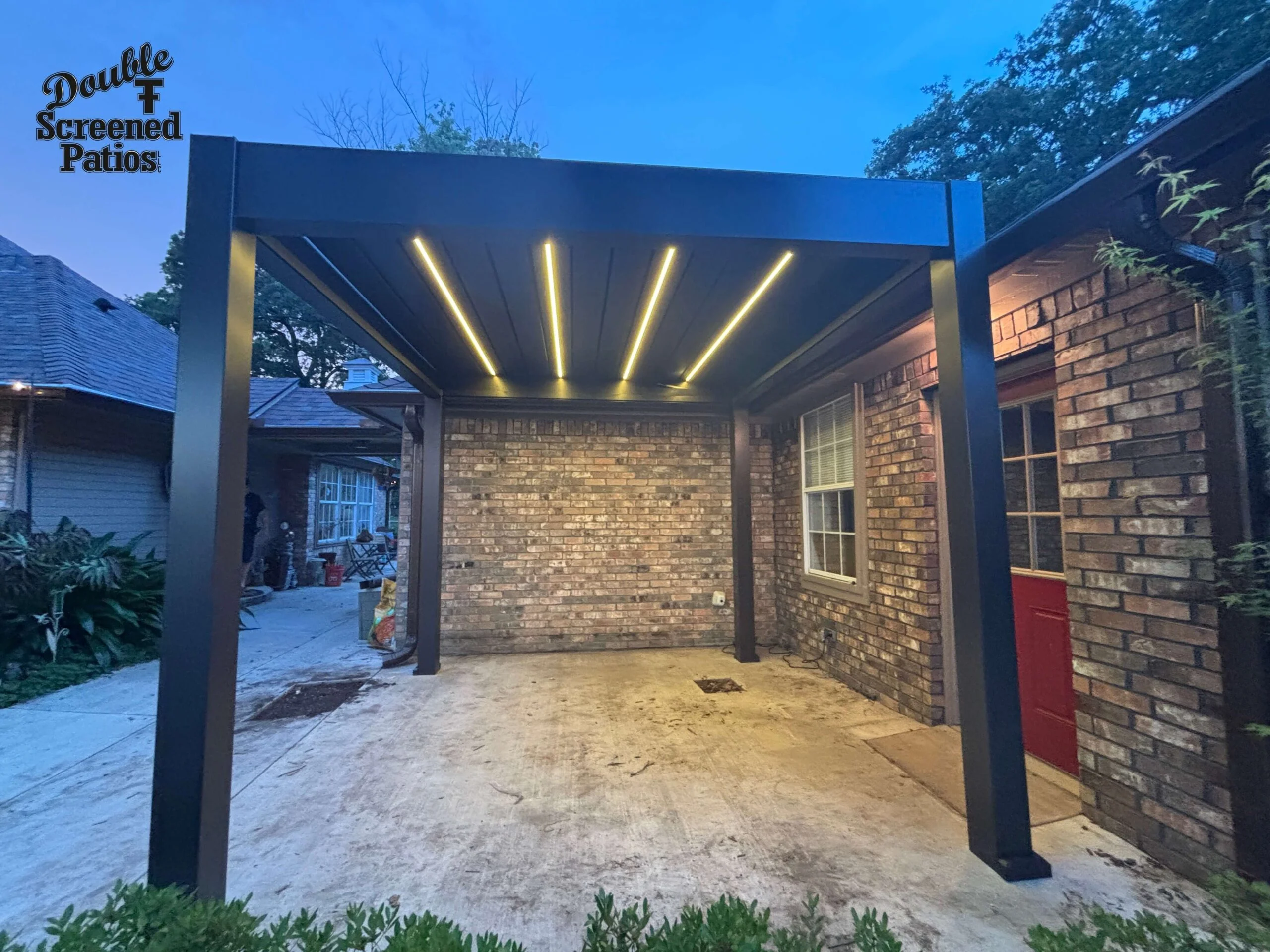
A louvered pergola is an open-air aluminum structure with a motorized blade roof system. The blades rotate from fully open to fully closed, giving you control over shade, airflow, and rain protection. The sides remain open unless you add retractable screens or privacy panels.
Same goal, more usable outdoor space, but very different experiences.
What a Screened Patio Actually Gives You
A screened enclosure’s biggest strength is total insect protection. In Collin & Denton Counties, mosquitoes are a genuine problem from April through October. A properly installed screen room with tight mesh and a well-fitted door eliminates that entirely. You can sit outside at dusk in July without a single mosquito. That alone is a life-changing upgrade for a lot of homeowners.
Beyond bugs, a screened patio also provides:
- Rain protection on all sides. Wind-driven rain that would soak an open patio gets stopped by the screen panels, keeping the interior dry in most storm conditions.
- Partial UV filtering. Screen mesh reduces direct sun exposure, making the space meaningfully cooler than a fully open patio on a hot afternoon.
- Year-round usability in mild weather. On a cool January afternoon in Collin & Denton Counties, a screened enclosure is completely comfortable with no heating needed.
- Privacy. Dense screen mesh limits sightlines from neighboring yards, giving the space a more secluded feel.
The trade-off is that a screened enclosure is a fixed structure. Once it’s up, it’s always enclosed. Some homeowners find that it feels a little confining compared to the openness of a pergola. Others never notice.
What a Louvered Pergola Actually Gives You
A louvered pergola’s biggest strength is flexibility. The motorized aluminum blades let you adjust your overhead coverage in real time. Open them fully on a cool morning in October for maximum airflow and light. Close them at 2 PM in August to block the sun and stay dry during a passing storm. Most systems are operated by remote control or a smartphone app, so the adjustment takes about three seconds.
Beyond adjustability, a louvered pergola also provides:
- Architectural presence. A well-designed pergola adds significant visual character to a backyard in a way that a screen room typically doesn’t. If curb appeal or outdoor aesthetics matter to you, pergolas tend to win this category clearly.
- Flexibility to add side treatments. Retractable screens, privacy panels, or even outdoor curtains can be added to the sides to increase enclosure when needed, while still keeping the space fully open the rest of the time.
- Wind load durability. Quality aluminum louvered systems are engineered for high-wind conditions and carry strong structural ratings. Closed blades actually strengthen the overall structure in storm conditions.
- Waterproof performance. With blades closed, a quality louvered system is fully waterproof. Built-in gutters channel rainwater to downspouts, keeping the space underneath completely dry.
The trade-off is that a pergola with open sides doesn’t protect you from mosquitoes unless you add retractable screens. And the sides-open configuration means wind-driven rain can still reach your seating area depending on storm direction.
How They Compare on the Things That Matter in Texas
Here’s a direct comparison across the factors Collin & Denton Counties homeowners care most about:
| Factor | Screened Enclosure | Louvered Pergola |
| Mosquito and insect protection | Excellent | None without added screens |
| Rain protection | Good (sides and overhead) | Excellent overhead, open sides |
| Heat and UV reduction | Moderate | High (closed blades) |
| Airflow and ventilation | Moderate (mesh breathes) | Excellent (adjustable blades) |
| Flexibility and adjustability | Fixed structure | Full blade control |
| Aesthetic impact | Functional | High visual character |
| Side enclosure | Full | Open (screens optional) |
| Year-round usability | Good | Very good |
Neither structure wins on every dimension. The screened enclosure leads in insect protection and side weather coverage. The pergola leads on flexibility, aesthetics, and airflow control.
Cost Comparison for Collin & Denton Counties Homeowners
Cost is another meaningful difference between the two. For a standard 20×20 footprint in the Collin & Denton Counties market:
| Structure | Typical Installed Range |
| Screened patio enclosure | $12,000 – $22,000 |
| Louvered pergola | $18,000 – $35,000 |
Screened enclosures are generally the more affordable starting point. Louvered pergolas carry a higher price because of the motorized blade system, aluminum engineering, and drainage integration. That said, a pergola with added retractable screens closes the gap in functionality while still costing more than a standalone screen room.
Both represent strong long-term investments. Aluminum structures don’t rot, warp, or need repainting, and both carry manufacturer warranties. For a deeper look at how enclosure costs compare across structure types, our breakdown of how much a 20×20 patio cover costs in Collin & Denton Counties covers related pricing context in detail.
Which One Fits Your Lifestyle?
Here’s a simple way to think about it. A screened enclosure is probably the better fit if:
- Mosquitoes and insects are your primary complaints about being outdoors
- You want a consistent, always-enclosed space that feels like a room
- Budget is a meaningful constraint
- You have kids or pets who need a contained outdoor area
A louvered pergola is probably the better fit if:
- You want maximum flexibility and the ability to open things up completely
- Outdoor aesthetics and backyard design matter to you
- You entertain frequently and want a space that feels open and inviting
- You’re willing to add retractable screens for insect and side weather protection
Can You Have Both?
Actually, yes. Some Collin & Denton Counties homeowners install a louvered pergola over the main outdoor living and dining area for flexibility and aesthetics, then add a screened enclosure section adjacent to it as a dedicated bug-free zone. It costs more, but it gives you the best of both structures without compromise.
A screen room installation paired with a louvered pergola is one of the most complete outdoor living setups available for a Texas backyard. The two structures complement each other well when designed together from the start.
Frequently Asked Questions
Which is easier to maintain in Texas, a screen room or a pergola?
Both are low-maintenance aluminum structures that don’t rot or corrode. Screen rooms occasionally need mesh panel replacement after hail damage or wear, typically every 7 to 15 years. Louvered pergolas need periodic blade channel cleaning to keep drainage clear. Overall maintenance burden is similar and minimal for both.
Can a louvered pergola handle Texas hailstorms?
Quality aluminum louvered systems are engineered for significant wind and impact loads. Closing the blades before a storm is the recommended position for maximum structural strength. That said, severe hail can dent aluminum blade surfaces over time. Screen rooms face a similar risk with mesh panels, which can be punctured by large hail.
Do I need a permit for a screened patio or pergola in Collin & Denton Counties?
In most Collin & Denton County municipalities, yes. Both are considered permanent structures and typically require a building permit. Requirements vary by city, so your installer should confirm local requirements and handle permit filing as part of the project.
Will a screened patio add more value to my home than a pergola?
Both add value, but in different ways. Screened enclosures are viewed as functional living space additions and tend to appraise well as usable square footage. Pergolas add significant curb appeal and outdoor living value that buyers respond to strongly in Collin & Denton Counties’ outdoor-focused market. Neither is a clear winner on resale value; it depends on the buyer.
Can I add screens to a louvered pergola later to get insect protection?
Yes. Retractable motorized screens can be added to the sides of a louvered pergola after installation. Planning for them upfront is more cost-effective since the attachment points and framing can be incorporated during the original build, but retrofitting is a common and straightforward upgrade.
Talk to Someone Who Knows Collin & Denton Counties Backyards
The right choice comes down to your specific yard, how you use your outdoor space, and which trade-offs matter least to you. There’s no wrong answer here; both structures are genuinely excellent investments for a North Texas home.
Double T Screened Patios has installed both screened enclosures and louvered pergolas across Collin & Denton Counties for over a decade. Reach out, and let’s talk through what makes sense for your backyard.