Screened Patio vs. Covered Patio: Which One is Right for Your Collin & Denton Counties Home?
It’s one of the most common questions Collin & Denton Counties homeowners ask when they’re ready to upgrade their backyard. Both a screened patio and a covered patio improve your outdoor space significantly. Both are permanent aluminum structures that add real value to your home. But they solve different problems, and choosing the wrong one for your situation is an expensive mistake to undo.
The short version: a covered patio gives you shade and rain protection with an open, airy feel. A screened patio gives you all of that plus a fully enclosed space that keeps insects out and adds a layer of privacy. As custom sunroom installers in Collin & Denton Counties, we’ve walked hundreds of homeowners through this exact decision. This guide lays out the honest differences so you can choose with confidence.
If you’d like a specialist to look at your specific space before you commit, feel free to reach out for a no-pressure conversation.
The Core Difference Between the Two
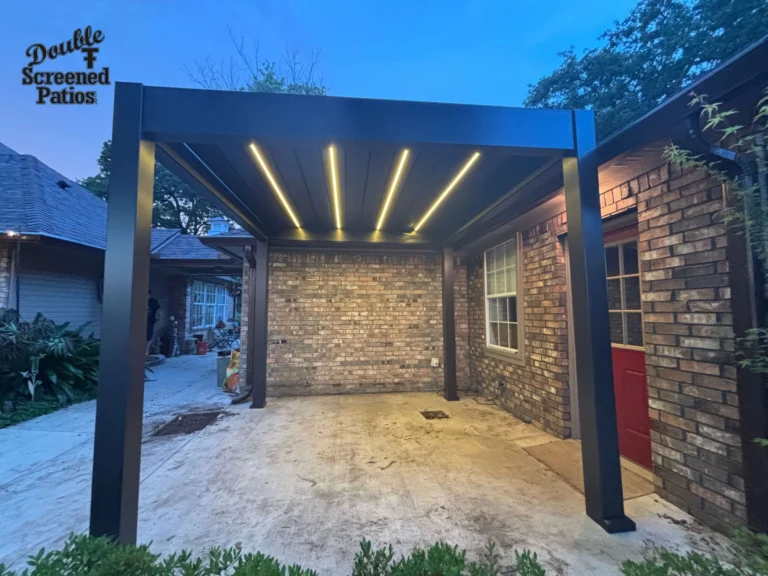
A covered patio is an overhead roof structure attached to your home or freestanding in your yard. It has a solid or semi-transparent roof panel and open sides. You get shade overhead and rain protection, but wind, insects, and blowing rain can still reach you from the sides.
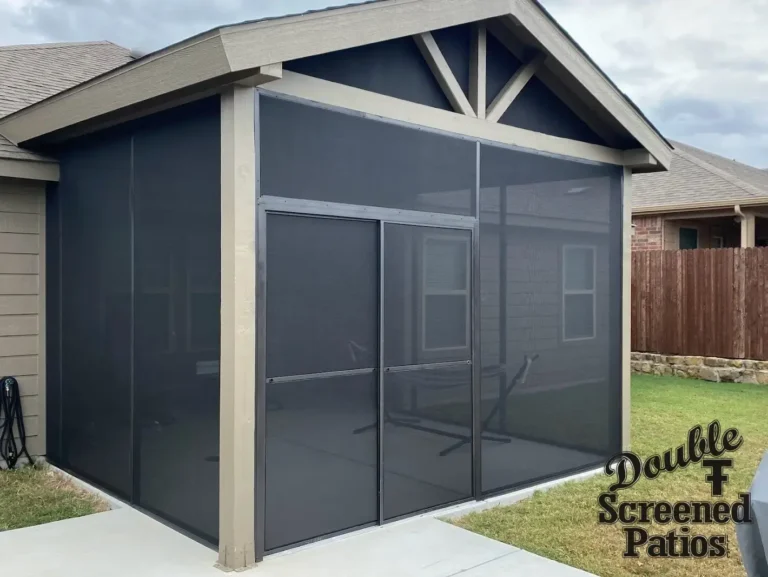
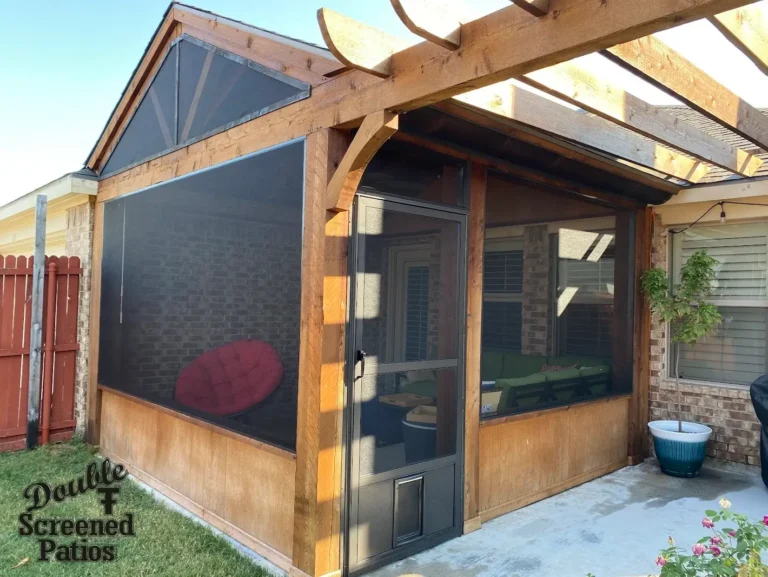
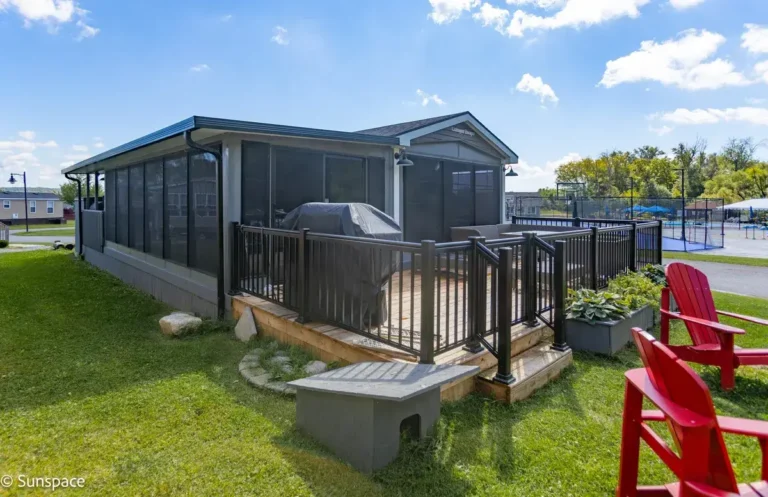
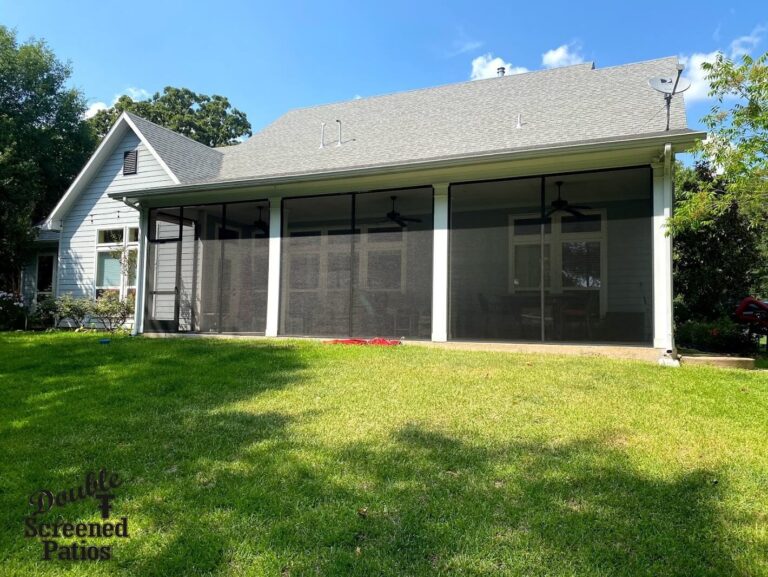
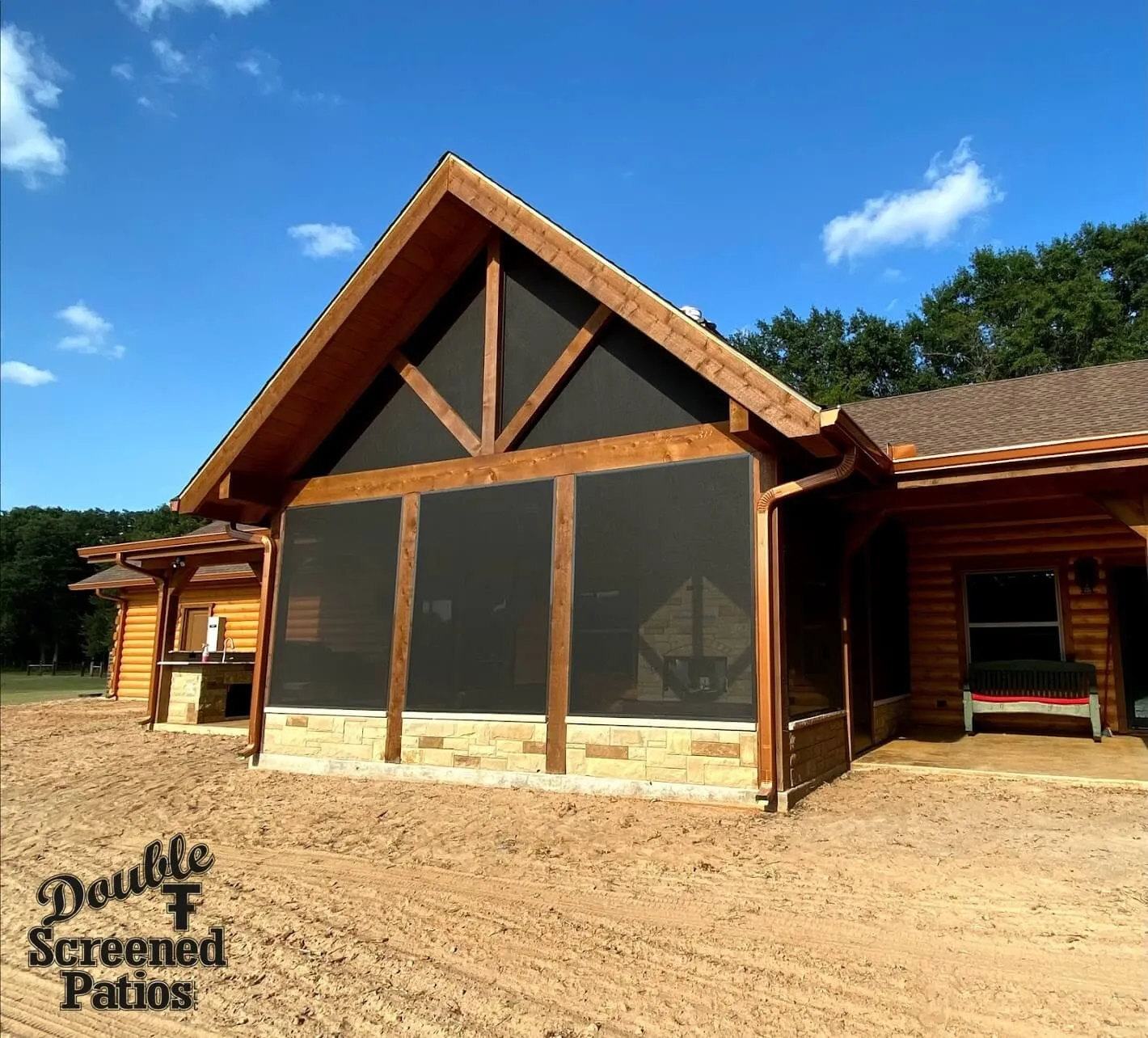
A screened patio (also called a screen room or screened enclosure) adds aluminum-framed mesh panels on all four sides, plus a ceiling and a screen door. The entire space is enclosed. You’re separated from the outdoors while still feeling like you’re in it.
That one distinction, open sides vs. enclosed sides, drives almost every other difference between the two.
What a Covered Patio Actually Gives You
A covered patio is the more open and flexible of the two options. The roof keeps direct sun and rain off your outdoor furniture and seating area, which is genuinely transformative for a Collin & Denton Counties patio that would otherwise bake through the summer.
Here’s what you get with a well-installed patio cover:
- Consistent overhead shade. An insulated patio cover can drop the temperature underneath by 15 to 20 degrees compared to an uncovered slab. An acrylic panel cover lets diffused natural light through while still blocking UV rays.
- Rain protection from above. You can sit outside during light to moderate rain without getting wet. In heavier rain with wind, the open sides still let moisture in from angles.
- Full openness and airflow. There are no walls to contain you. Your patio feels like an extension of the yard, which many homeowners prefer for entertaining and a spacious feel.
- Easy furniture access. No doors to open and close, no enclosure to step in and out of. The covered patio flows naturally from the house to the yard.
- Lower starting cost. A patio cover is generally the most affordable permanent outdoor structure, with a straightforward installation process.
The trade-off is clear: no insect protection, no side weather coverage, and no privacy. In a Texas summer, that means mosquitoes at dusk are still a real problem, and a strong thunderstorm will still reach your seating area from the sides.
What a Screened Patio Actually Gives You
A screened patio solves the problems a covered patio can’t. The full enclosure keeps insects completely out, blocks wind-driven rain from the sides, reduces direct sun exposure, and creates a private outdoor room that functions independently of whatever is happening in the yard around it.
Here’s what you get with a screened enclosure:
- Complete insect protection. This is the single biggest functional difference. In Collin & Denton Counties, mosquitoes are a serious outdoor nuisance from April through October. A screened patio eliminates them entirely. You can sit outside at sunset in July without a single bite. For families with young children or homeowners who entertain outdoors regularly, this is often the deciding factor on its own.
- Side weather protection. Screen mesh stops wind-driven rain from reaching the interior in most storm conditions, keeping the space usable in weather that would drive you inside from a covered patio.
- Partial UV and heat reduction. Screen mesh filters some direct sun exposure, reducing heat inside the enclosure compared to a fully open or even covered-only patio.
- Privacy. Dense screen mesh creates a visual barrier from neighboring yards without blocking airflow or light entirely.
- A defined room feel. A screened patio functions as a true outdoor room. Many homeowners furnish them with sofas, dining sets, and rugs, furniture they wouldn’t put on an open patio.
The trade-off is that a screened enclosure is always enclosed. There’s no option to open things up completely on a perfect spring morning. And the mesh panels, while durable, do require occasional replacement over the life of the structure.
How They Compare on the Things That Matter Most
Here’s a direct side-by-side on the factors Collin & Denton Counties homeowners care about:
| Factor | Covered Patio | Screened Patio |
| Overhead shade and rain protection | Excellent | Excellent |
| Insect protection | None | Excellent |
| Side weather protection | None | Good |
| Airflow and openness | Excellent | Moderate |
| Privacy | None | Good |
| Defined room feel | No | Yes |
| Year-round usability | Good | Very good |
| Maintenance requirements | Very low | Low |
| Starting cost | Lower | Higher |
Neither option is objectively better. The right answer depends entirely on what bothers you most about your current outdoor situation.
Cost Comparison in the Collin & Denton Counties Market
For a standard 20×20 footprint in North Texas, here’s where each option typically lands:
| Structure | Typical Installed Range |
| Insulated patio cover | $10,000 – $18,000 |
| Acrylic patio cover | $8,000 – $14,000 |
| Screened patio enclosure | $12,000 – $22,000 |
A screened enclosure typically costs more than a basic patio cover because of the additional framing, mesh panels, door hardware, and the full perimeter enclosure work involved. That said, the gap is smaller than most homeowners expect. For a full breakdown of what goes into patio cover pricing specifically, our article on how much a 20×20 patio cover costs in Collin & Denton Counties walks through the numbers in detail.
These figures are representative of current Collin & Denton Counties market rates and should be confirmed with a site-specific quote, as installation conditions vary by property.
Which One Makes More Sense for Your Situation?
A covered patio is probably the better fit if:
- You want the most open, airy outdoor feel possible
- Mosquitoes aren’t a major issue in your yard or neighborhood
- You entertain large groups where an enclosed space would feel confining
- Budget is a primary consideration, and you want maximum space for the investment
- You already have ceiling fans or a misting system to manage heat
A screened patio is probably the better fit if:
- Mosquitoes and insects are your biggest outdoor complaint
- You have young children or pets who need a safe, contained outdoor area
- You want to furnish the space with nicer furniture, you’d rather not expose it to the elements
- Privacy from neighboring properties matters to you
- You want a space that functions as a true outdoor room year-round
What If You Want Both?
This is more common than you’d think. A covered patio can serve as the main outdoor entertaining area with an open feel, while a screened enclosure section adjacent to it handles the bug-free dining or lounging zone. The two structures complement each other well when designed together.
A patio cover installation and a screen room installation planned as a connected system from the start give you the flexibility of an open covered patio and the comfort of a fully enclosed space, without having to choose between them.
Frequently Asked Questions
Does a screened patio add more value than a covered patio in Texas?
Both add real value to a Collin & Denton Counties home. Screened enclosures tend to appraise as usable living space, which can add more to assessed value. Covered patios are a strong buyer expectation in Collin & Denton Counties and add significant lifestyle appeal. In practice, both are viewed positively by buyers in this market, and neither is a clear winner on resale value alone.
Can I convert a covered patio to a screened patio later?
In many cases, yes. If the existing patio cover was installed with a compatible aluminum frame, screen panels can be added to the perimeter to create an enclosure. However, not all patio covers are designed to accept screen framing easily, and the conversion cost can approach the price of building a screen room from scratch. It’s worth discussing with your installer upfront if you think you might want screens later.
Do screened patios hold up to Texas hailstorms?
Standard fiberglass mesh can be punctured by large hail, and this is one of the more common maintenance issues for screen rooms in North Texas. Most mesh panels are relatively straightforward and inexpensive to replace when damaged. The aluminum frame itself holds up well to hail without damage.
Does a covered patio need a permit in Collin & Denton Counties?
Yes, in most Collin & Denton County municipalities. Both covered patios and screened enclosures are considered permanent structures and require a building permit. Your installer should handle permit filing as part of the project scope.
Which option is better for keeping a patio cool in Texas summer?
A screened enclosure provides slightly better heat reduction because the mesh filters some direct sun from the sides in addition to the overhead cover. An insulated patio cover with ceiling fans is a very close second and feels more open. For a deeper look at managing patio heat specifically, our guide on how to keep your patio cool in a Texas summer covers all the options in detail.
Ready to Make a Decision?
If you’re still on the fence, the most useful next step is having someone look at your actual yard, sun angle, and how you use your outdoor space. The right structure becomes much clearer when you look at the specifics rather than the general options.
Double T Screened Patios has been helping Collin & Denton County homeowners choose and install the right outdoor structures for over a decade. Get in touch, and let’s figure out which direction makes the most sense for your space.
Tiny-home owners can see the same idea at a smaller scale in these North Texas tiny home screen room projects.